

Convert vibrations into electricity: a French invention for autonomous recharging
Le Comptoir Éolien presents an invention that converts mechanical vibrations into electricity for battery recharging. The system combines a low-power motor, permanent magnet, and coil, with (optionally) a rectifier bridge for DC storage. It targets situations where only low vibrational sources (devices, structures, micro-movements) are available, and where auxiliary autonomy is crucial.
Key takeaways
- Harness low vibrations: when sun and wind are unavailable or irregular, this system recovers often lost energy.
- Emergency recharge of flat batteries.
- Compact & portable format: designed for autonomy in nomadic or isolated contexts (portable devices, sensors/IoT, sites without available energy).
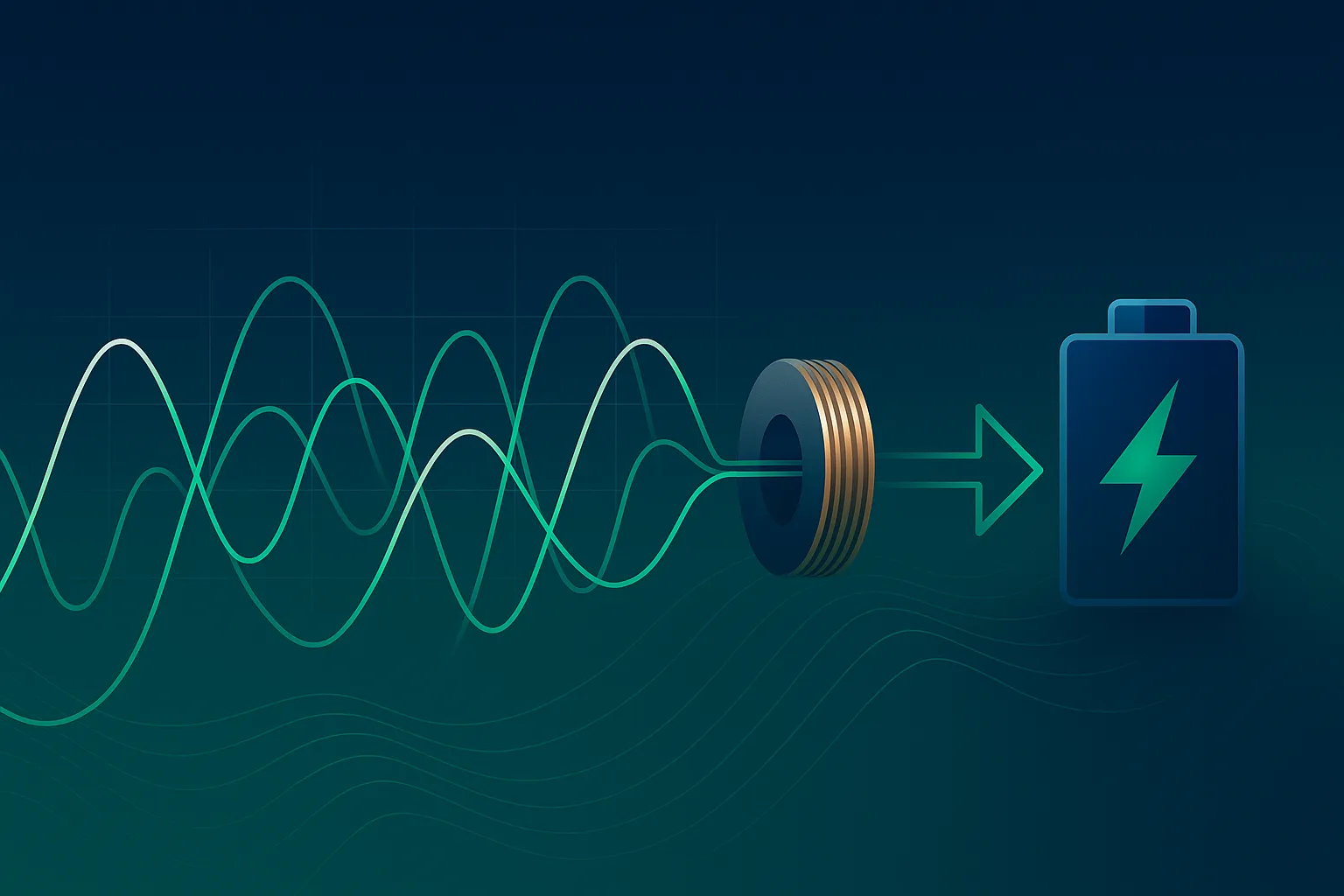
How does it work?
- The motor generates vibrations.
- These vibrations disturb the field of the permanent magnet.
- The coil experiences an induced voltage, according to the principle of electromagnetic induction.
- An (optional) rectifier bridge converts this current into direct current to recharge a battery.
Important: the device does not create energy; it recovers and converts an existing mechanical energy (vibrations) into electricity, with the aim of reducing losses.

What is it used for concretely?
- Nomadic/field: emergency recharge of light tools or low-power accessories.
- IoT & sensors: powering sensors located on vibrating structures (machines, gateways, urban equipment).
- Isolated sites: complement to other micro-energy sources when nothing else is available.
Usage advice & best practices
- Sizing: adapt the chemistry and charge management (voltage/current) to the target battery. The document shows an example in 6 V/4 Ah; other configurations require suitable electronics.
- Safety: use protections (diodes, fuses, charge controller) and respect the charging ranges of the battery manufacturer. The figures published in the document are related to a prototype; standardized tests are still necessary before communicating guaranteed performance.
Contacts
- Direct contact inventor: [email protected]
About the invention
System for recovering and converting vibrational energy into electricity for battery recharging — autonomous device combining motor, magnet, and coil, designed to convert vibrations into usable electricity for recharging. Applications: portable devices, sensors, isolated environments.
Mentions & caution
- INPI References: FR2503440 — filed on 04/02/2025; authorization for disclosure/exploitation on 06/06/2025.
- The device is at the prototype stage; any performance must be validated by standardized and independent tests before any communication of guaranteed figures.