

Skip to content

Calculation of the power of a three-phase motor

In a three-phase electrical installation, it happens that the currents themselves do not have the same effective value, the same offset, or even a sinusoidal shape (as for example a current through an energy-saving lamp). The formulas developed in this booklet are however only valid for sinusoidal-shaped currents.

Inscrivez les valeurs dans les cases et validez.
Le symbole décimal est le "point" !   

Calcul de la puissance d'un moteur triphasé : P = U.I. Cosφ.η.V3

U = V I = A η =   Cosφ =

    P =  W

I = P / (U.Cosφ. η.V3)

P = W U = V η =   Cosφ =

    I =  A

U = P / (I.Cosφ.η.V3)

P = W I = A η =   Cosφ =

   U =   V

η Represents the efficiency of the motor, ranging from "0" no efficiency to "1" ideal motor, all electrical energy is transformed into mechanical energy. This value is normally indicated on the motor's nameplate. If not, one can use 0.6 to 0.8 or even 1 to simplify calculations, but the power will of course be overestimated...
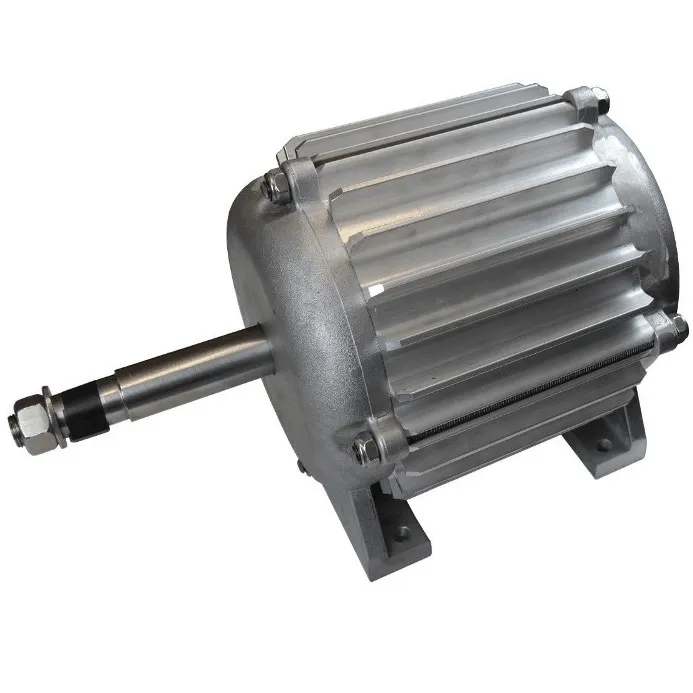
The power of a three-phase motor

Frequently Asked Questions

How to calculate the power of a three-phase motor?
The power of a three-phase motor can be calculated with the formula: P = U × I × Cosφ × η × √3, where: - U is the voltage in volts, - I is the current intensity in amperes, - Cosφ is the power factor, - η is the motor efficiency (between 0 and 1), - √3 is the square root of 3, approximately 1.732.
What does the efficiency η mean in power calculation?
The efficiency η (written 'eta') represents the motor's effectiveness in converting electrical energy into mechanical energy. An ideal motor would have an efficiency of 1, but in practice, this value generally ranges between 0.6 and 0.8. The higher the efficiency, the more effective the motor.
Why is the square root of 3 used in the calculation of a three-phase motor?
The square root of 3 (approximately 1.732) is used in the calculation of the power of a three-phase motor because it represents the ratio between line voltage and phase voltage in a balanced three-phase system. This constant is essential to account for the three phases and their 120° angular displacement.
What happens if the power factor (Cosφ) is not taken into account?
The power factor (Cosφ) is crucial because it indicates the proportion of useful energy converted into mechanical work. If you do not take it into account, the calculated power will be overestimated, as part of the energy is lost as heat and not used efficiently.
What to do if the motor efficiency is not indicated?
If the efficiency is not specified on the motor's nameplate, it is possible to use an approximate value: - 0.6 for an old motor, - 0.8 for a standard motor, - 1 to simplify the calculation, although this overestimates the actual power.
Why is the calculation only valid for sinusoidal currents?
The formula P = U × I × Cosφ × η × √3 is based on the assumption of a sinusoidal current, that is, an alternating current with a regular waveform. If the current is distorted (as in the case of energy-saving lamps or motors with frequency converters), this formula no longer applies directly, as the power factor and harmonics can affect the actual power delivered.

Your legal guarantee rights

Your legal guarantee rights

europa.eu/youreurope/citizens/consumers/shopping/guarantees/index_en.htm