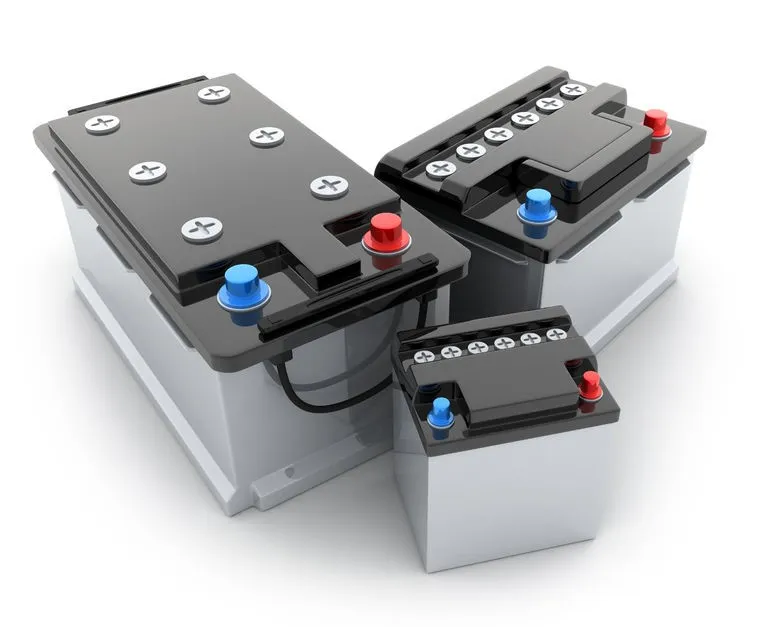

How to choose the right 12V, 24V, or 36V battery for an RV, remote site, or power station?
Why choosing the right battery is essential for electrical autonomy
Are you wondering which battery to choose for your solar installation or RV?
It's an essential question because a bad battery or poor sizing can compromise all your electrical autonomy.
The battery is at the heart of any autonomous installation: RV, remote site, electric bike, Jackery station, etc.
👉 An unsuitable battery = low performance, too frequent recharges, or even failure.
Step 1: Calculate daily consumption
Start by adding up all your consumption over 24 hours:
- 💡 60 W TV used 3 h/day → 60 × 3 = 180 Wh/day
- ❄️ Fridge consuming 500 Wh/day (or 0.5 kWh/day indicated on the label) → 500 Wh/day
Total = 180 + 500 = 680 Wh/day
⚠️ Be careful not to confuse power (W) and consumption (Wh).
A fridge of 500 W running continuously 24 h/day would consume 12,000 Wh/day (12 kWh/day), which is far beyond a typical domestic fridge.
Step 2: Convert to ampere-hours (Ah)
Formula: Ah/day = Wh/day ÷ V
For 680 Wh/d:
- At 12 V → 680 ÷ 12 = 56.7 Ah/d
- At 24 V → 680 ÷ 24 = 28.3 Ah/d
- At 36 V → 680 ÷ 36 = 18.9 Ah/d
Step 3: Size the usable capacity
A battery is never sized at 100% of its capacity.
- Lead (AGM, GEL, open lead): recommended depth of discharge (DoD) = 50%
- 12 V: 56.7 ÷ 0.5 = 113.4 Ah
- 24 V: 28.3 ÷ 0.5 = 56.6 Ah
- Lithium (LiFePO4): depth of discharge 80–90%
- 12 V: 56.7 ÷ 0.8 = 70.9 Ah
- 12 V: 56.7 ÷ 0.9 = 63.0 Ah
👉 Always add 10 to 20% margin to compensate for losses, aging, and real usage conditions.
Step 4: Account for conversion losses
If your devices operate at 230 V via a converter, add about 10% losses.
Example: 680 Wh ÷ 0.9 ≈ 755 Wh/d → at 12 V = 62.9 Ah/d (then apply DoD).
Step 5: Choose the right type of battery
- 🔋 AGM or GEL: good for slow discharges, maintenance-free
- 🔋 Lithium (LiFePO4): very durable (up to 3000 cycles), lightweight and efficient
- 🔋 Classic lead-acid: economical but reduced lifespan
👉 A good battery charges faster and stores energy efficiently.
Step 6: Avoid common mistakes
❌ Using a car battery → not suitable for deep discharges
❌ Coupling with a pseudo-sine converter → efficiency losses and malfunctions
✔ Prefer a pure sine converter
✔ Choose a dedicated cell battery (AGM, GEL, or lithium depending on your budget and needs)
Complete example (corrected)
You have:
- TV (60 W × 3 h) = 180 Wh/d
- Fridge = 500 Wh/d
→ Total: 680 Wh/d
Required battery (1 day autonomy, excluding margin):
- 12 V (lead 50% DoD): 113.4 Ah
- 12 V (LiFePO4 80–90% DoD): 63–71 Ah
- 24 V (lead 50% DoD): 56.6 Ah
Special cases: 36V battery, Jackery and power stations
The 36 V batteries are mainly used for electric bikes and some portable stations like the Jackery Explorer.
Always check compatibility with your converter or regulator.
Conclusion
To properly size your battery:
- Calculate your daily consumption in Wh
- Choose the voltage of your system (12 V / 24 V / 36 V)
- Convert to Ah
- Apply the depth of discharge according to the type of battery
- Add a margin of 10 to 20%
👉 Good autonomy requires a suitable battery and a quality pure sine converter.