

What is a charge controller for a wind turbine?
In terms of schematics, a first difference is noted between solar and wind regulators. The former are connected in series and the latter in parallel for the most part. Thus, the wind turbine or turbines are connected to the batteries and the regulator itself is also connected to the batteries but on a different line. However, there is an additional component which is an overflow resistor connected to the regulator.
This resistor is used to eliminate excess energy produced by the wind in the form of heat when the batteries are already fully charged. It is an essential function because, unlike the solar regulator, the wind regulator is not connected in series and cannot cut the charge, meaning open the circuit, without risking the destruction of the wind turbine.
A wind turbine indeed cannot be disconnected from its batteries; when this happens, the generator goes into 'freewheel' and the rotation speed increases dangerously to speeds for which it was not designed. This can lead to strong vibrations that will quickly cause damage either electrically, often the stator, or to the blades which will not withstand the speed.
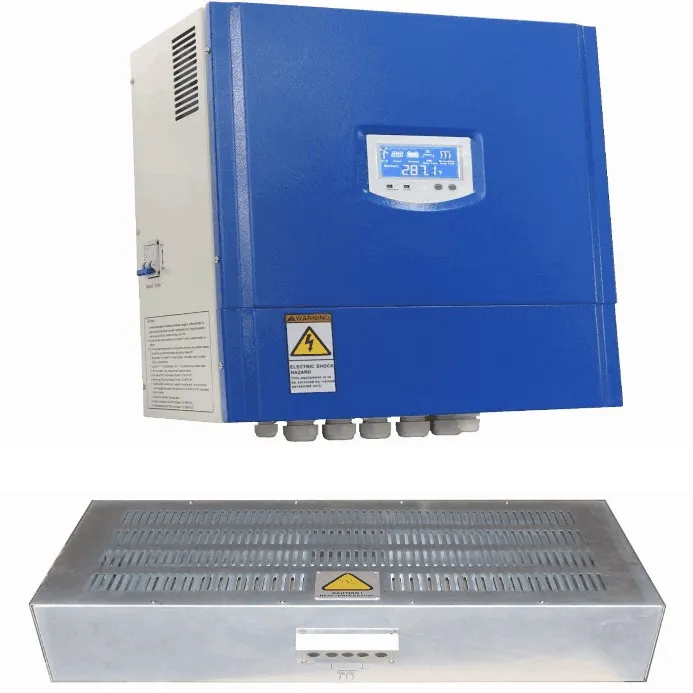
The regulator must therefore monitor both the voltage, the charge (amperage), and the temperature of the batteries. As soon as one of these parameters is in the red, it then diverts all or only part of the amperage from the wind turbine to a resistor that will consume the excess energy by heating.
The regulators used for this are almost all of the PWM (Pulse Width Modulation) type, meaning they perform micro-cuts to reduce the amperage. In this case, it allows them to divert a more or less large part of the wind turbine's energy and thereby continue or stop the charging of the batteries to protect them. The batteries indeed suffer from several parameters, with too high a charge (amperage) causing excessive heat or too high a voltage leading to the same result.
Our wind turbine regulators are available in the following section: Wind Regulators