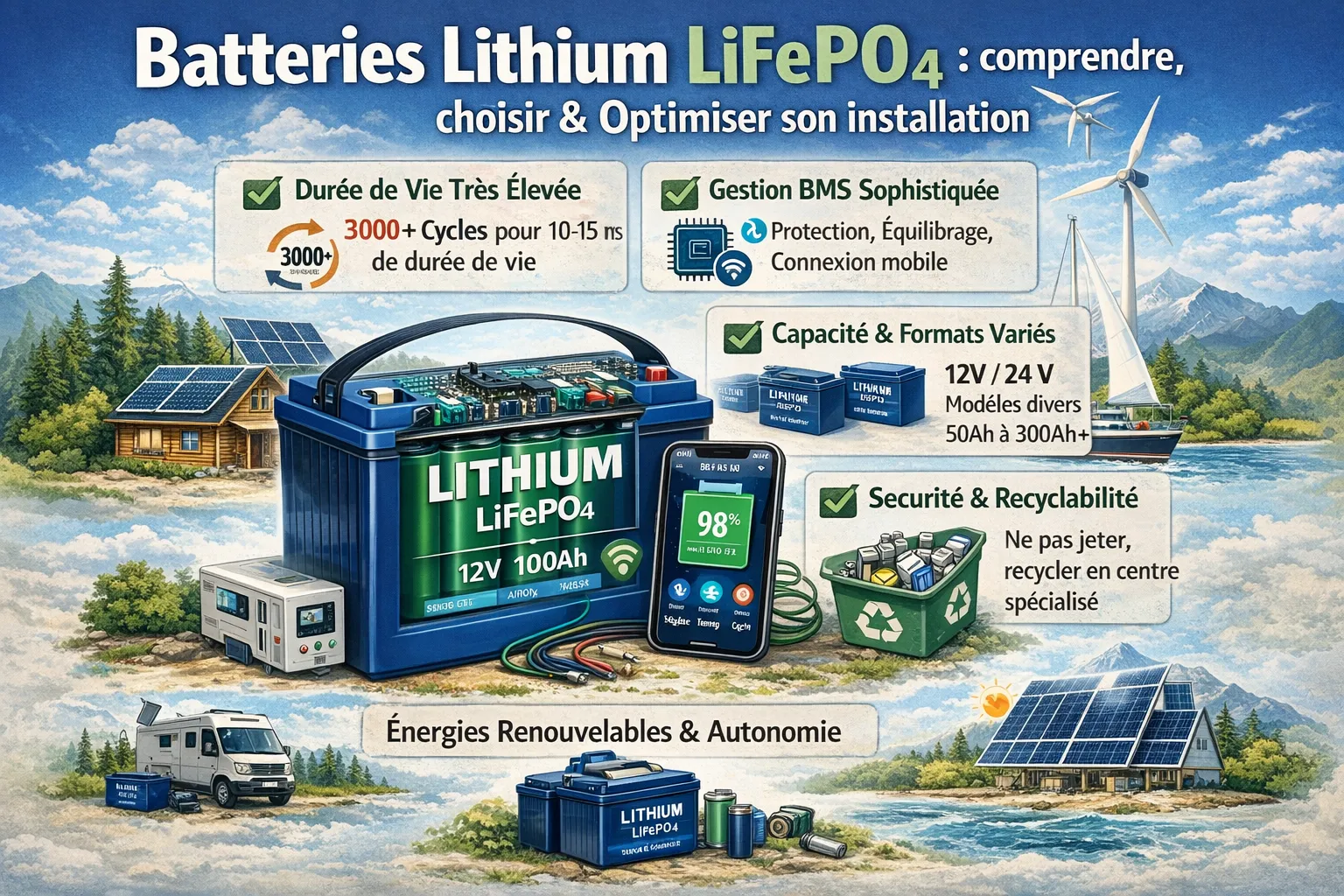

Lithium LiFePO₄ Batteries: understand, choose and optimize your installation
Lithium Iron Phosphate (LiFePO₄) batteries have today become the reference for solar, wind, and hybrid installations in isolated sites or for self-consumption.
Lighter, more durable, and more stable than traditional lead batteries, they offer excellent energy efficiency and exceptional longevity.
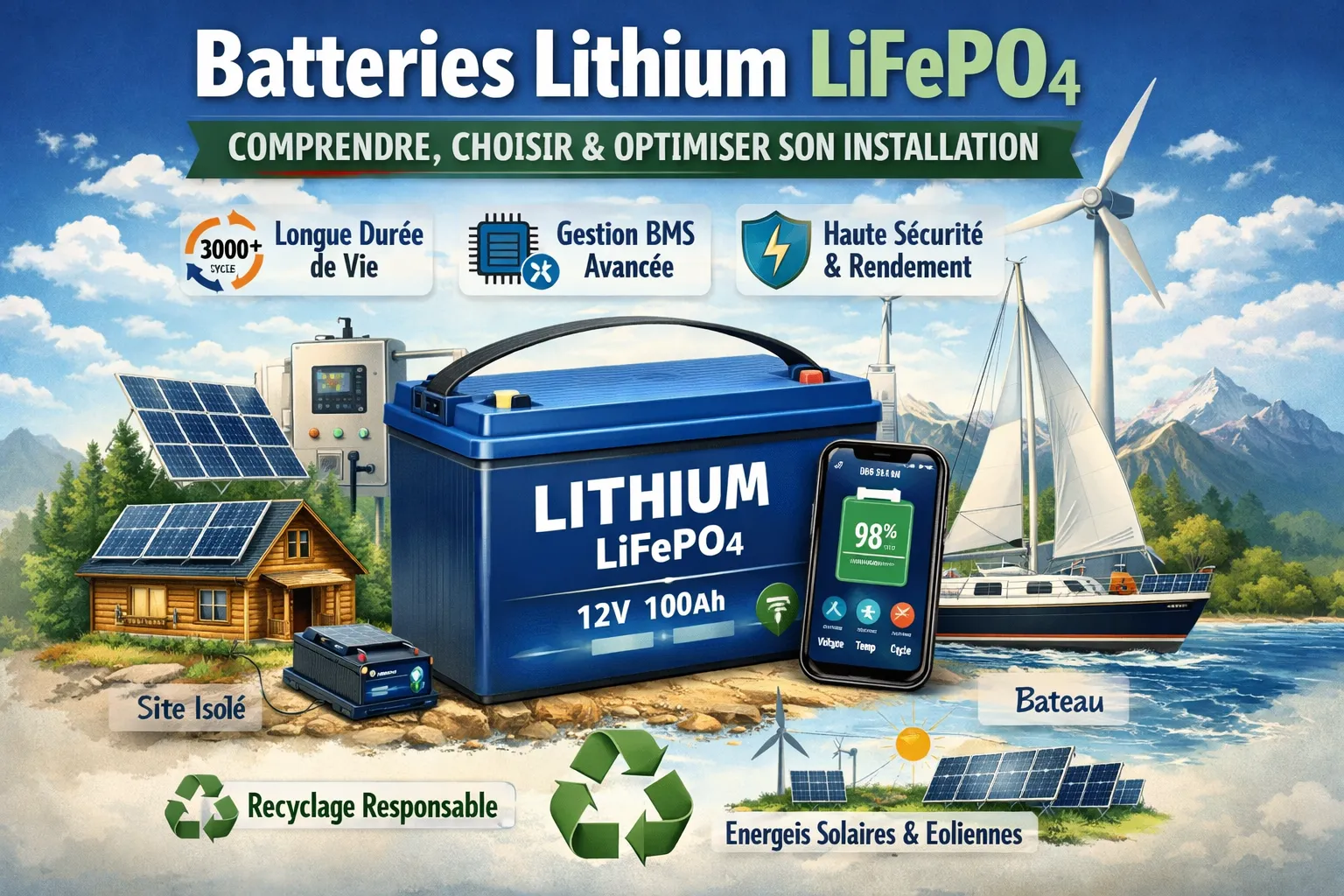
👉 Find our complete selection here:
https://www.comptoireolien.fr/batteries-au-lithium.html
Why choose a LiFePO₄ battery?
✔️ Very high lifespan
A lithium LiFePO₄ battery can reach 3000 to 6000 cycles depending on usage conditions (depth of discharge, temperature, BMS management).
For comparison:
- AGM lead battery: 400 to 800 cycles
- GEL Battery: 600 to 1000 cycles
- Lithium LiFePO₄: up to 10 times more durable
✔️ Superior energy efficiency
The charge/discharge efficiency generally exceeds 95%, which means less loss and more actually usable energy.
Ideal for:
- Home wind installations
- Off-grid solar kits
- Camper, boat, converted van
- Autonomous cabins
✔️ Safety and stability
The LiFePO₄ technology is recognized for its high thermal stability and low risk of runaway compared to other lithium-ion technologies.
The role of the BMS (Battery Management System) is essential:
- Overcharge protection
- Deep discharge protection
- Cell balancing
- Short-circuit protection
- Temperature monitoring
Which capacity to choose?
The choice mainly depends on:
- Your daily consumption (Wh/day)
- From your system voltage (12V / 24V / 48V)
- From the desired number of days of autonomy
Simplified example:
- Consumption: 1500 Wh / day
- System: 24V
- Desired autonomy: 2 days
Required capacity ≈
1500 × 2 = 3000 Wh
3000 Wh ÷ 24V = 125 Ah minimum
👉 You can find different models suitable for your installation here:
https://www.comptoireolien.fr/batteries-au-lithium.html
Lithium vs Lead: should you replace your existing setup?
Yes, in many cases, replacement is relevant:
- Significant weight reduction
- Faster charging
- Deeper discharge possible (80 to 90% without degradation)
- Multiplied lifespan
⚠️ However, be careful:
- Check the regulator compatibility
- Check the charging parameters
- Possibly adapt the inverter
Ideal applications
Lithium batteries are particularly suitable:
- 🔹 Remote site (cabin, hut, refuge)
- 🔹 Domestic wind turbine installation
- 🔹 Hybrid solar + wind system
- 🔹 Camper van and converted van
- 🔹 Boat
- 🔹 Electrical backup
End of life and recycling
Lithium batteries should never be thrown in regular waste.
They must be taken to specialized collection centers.
Their lifespan being very long, their environmental impact is generally lower in the long term compared to lead batteries replaced more frequently.
In summary
Lithium LiFePO₄ batteries represent today:
✔️ The most sustainable solution
✔️ The best energy efficiency
✔️ A profitable long-term investment
✔️ A technology perfectly suited to renewable energies
🔋 Discover the full range
To view available models, capacities, voltages, and technical specifications: