

Skip to content

What is a converter?

A voltage converter is connected to the batteries from which it receives current and on which you connect the electrical devices you wish to operate.

The voltage converter transforms the direct current stored in one or more batteries at a voltage of 12V, 24V, or 48V into alternating current at 230V.
Solar converter installation
Photo credit: Stocklib — Image ref: 1-100713066

Some converters are designed to plug into your vehicle's cigarette lighter socket to power electronic devices such as laptops, phones, camcorders, game consoles, DVD players, battery chargers, small portable tools, bottle warmers, etc. They are improperly called "cigarette lighter converters."

The most common converters are 12V and 24V to 230V converters. You can also find, especially for high-power solar and wind installations (over 1500 Wc), 48V to 230V converters.
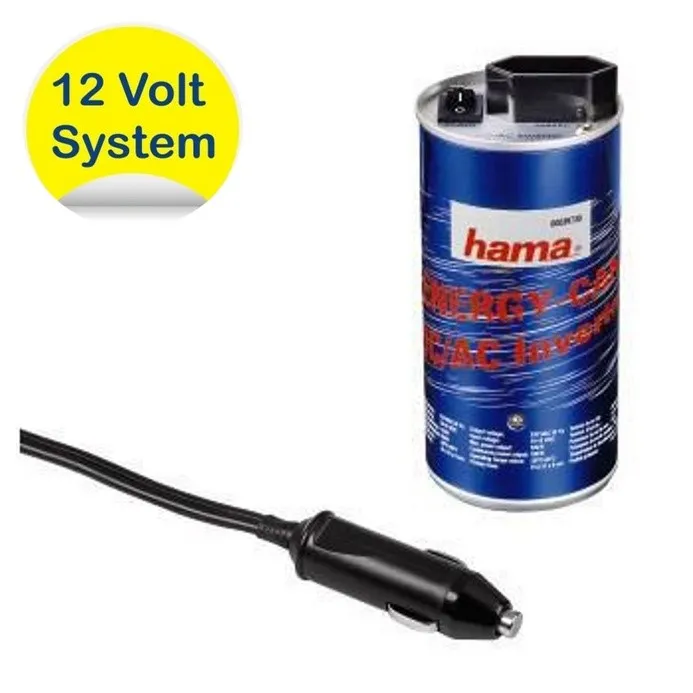
230V Converter

Converter choice:

There are two main families of converters: quasi-sine converters or pure sine converters. The electrical signal emitted by a quasi-sine converter is less regular than that of a pure sine. This implies that the use of a quasi-sine converter is recommended with electrical devices that are neither inductive nor electronic: incandescent lighting, iron, coffee maker, hotplates, oven, heater, fridge, cathode ray TV...

Pure sine wave converter

For devices that require a regular electrical signal, such as plasma or LCD screens, computers, measuring equipment, etc., it is strongly recommended to use pure sine converters.

Determining the power of the converter:

To determine the power of the converter, there is a simple principle: the sum of the powers of the devices connected to the converter must be less than the power of the converter. So you just need to calculate the sum of the operating powers of the devices you want to connect to the converter. This power, expressed in watts, is indicated in the user manual of the electrical devices or on the devices themselves.

It is important to distinguish between operating power and starting power, which is necessary to start an electrical device. The starting power is much higher than the nominal power: up to 2 to 3 times higher. High-quality converters absorb consumption peaks up to 2 times their nominal power (for short durations). So generally this is not a problem, however, in case of doubt, it may be advisable to "oversize" the converter.

Reminder: it is recommended to minimize the cable length between the battery and the converter (less than 6m) and to respect the recommended cable section to avoid losses.

Frequently Asked Questions

What is a voltage converter?
A voltage converter is a device that receives direct current (12V, 24V, or 48V) stored in one or more batteries and transforms it into 230V alternating current, usable by your electrical devices. Some converters are specially designed to plug into a vehicle's cigarette lighter socket (improperly called "cigarette lighter converters").
How to choose between a quasi-sine wave converter and a pure sine wave converter?
A quasi-sine wave converter is suitable for simple devices (incandescent lamps, irons, coffee makers...), while a pure sine wave converter is recommended for sensitive or electronic devices (LCD/plasma screens, computers, measuring equipment...). A pure sine wave delivers a more regular and safer electrical signal for these devices.
How to determine the necessary power of the converter?
Add up the nominal power (W) of the devices you plan to connect. This sum must be less than the nominal power of the converter. Also consider the starting power, which can be 2 to 3 times higher than the operating power, especially for devices with motors or compressors.
Should the starting power of devices be taken into account?
Yes. An electrical device (for example, a refrigerator) may require a starting power 2 to 3 times higher than its nominal power. Quality converters can absorb peaks up to 2 times their nominal power, but in case of doubt, it is preferable to choose a slightly more powerful converter.
Can a solar or wind converter operate without a battery?
Generally, one or more batteries are used to store energy to provide it stably to the converter. Completely dispensing with a battery is only possible if the production (solar panel or wind turbine) matches consumption in real-time, which is rarely the case. It is therefore strongly recommended to use batteries to ensure continuous power supply.
How to correctly install a converter?
Install the converter near the battery to minimize cable length (ideally less than 6 meters). Follow the recommended cable section to avoid energy losses and ensure that connections are secure and well-tightened.
What about the converter's warranty?
Within the European Union, the legal conformity warranty is two years. Some manufacturers or sellers may offer a longer commercial warranty. It is advisable to check the warranty conditions with the seller or in the product documentation.

Your legal guarantee rights

Your legal guarantee rights

europa.eu/youreurope/citizens/consumers/shopping/guarantees/index_en.htm