

Pure sine converter: the safety precautions no one talks about!
Two inexpensive tips to increase the longevity of a pure sine wave inverter!
✔ Install a fuse holder at the input of the pure sine wave inverter.
Never connect the pure sine wave inverter directly to a vehicle battery.
To do this, first install a fuse holder on the “+” cable connecting to the battery.
✔ Install a curve C circuit breaker at the 220-volt output of the pure sine wave inverter.
This guarantees you overload protection for only a few euros!
A useful tip for an off-grid system!
✔ If your pure sine wave inverter is said to be “off-grid” it means you cannot connect it to the public power grid. The opposite would be called “on-grid.”
✔ In the case of “off-grid,” you must be wary of switch systems between your pure sine wave inverter and a generator. They are often too fast!
Tip: Add a time-delay relay to your setup to avoid phase returns. This will protect the capacitors of your pure sine wave inverter and prevent them from “blowing.”
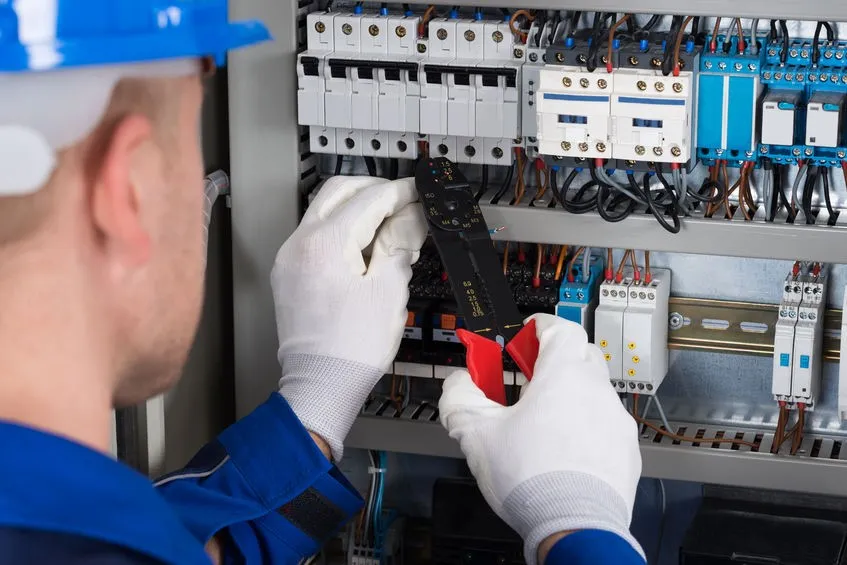
Two imperative recommendations before turning on your pure sine wave inverter!
✔ Absolutely avoid polarity reversal.
Make sure the + goes to the + and the – goes to the –
It seems silly but otherwise the fuses of the pure sine wave inverter will “blow.”
The problem is that you won't be able to change them yourself because you almost always have to disassemble the device to access them.
✔ If the pure sine wave inverter is mounted in a vehicle and connected to the main battery, never start the inverter before starting the vehicle.
Indeed, vehicle batteries are rapid discharge and can cause an overload at the input of the pure sine wave inverter.
In conclusion: start your pure sine wave inverter after starting your vehicle.
✔ Tip: prefer an installation on a cell battery, as is the case in a motorhome. This will save you from having to disconnect the inverter before starting the vehicle!
Above all, don't forget the charge calls!
✔ You have a complete explanation of this phenomenon in our section about so-called "inductive" loads: Everything you need to know about a 12v 220v converter in five minutes flat!
✔ In short, what you need to remember is that when an electrical device with a motor or compressor (drill, air conditioner, etc.) is connected to the pure sine wave inverter, it is necessary to ensure that the inverter's power is at least three times greater than that of the electrical device.
Indeed, the starting power is much higher than the operating power of the electrical device.
Avoid extension cords!
✔ It is better to avoid installing an extension cord on the DC input of a pure sine wave inverter.
✔ The reason is simple: it causes a voltage drop that reduces the efficiency and power of the pure sine wave inverter.
It is imperative to connect the pure sine wave inverter to the ground!
✔ In case of a fixed installation, you just need to connect it to a metal grounding rod driven at least 1.2 meters deep.
✔ In a vehicle, it's very simple: just connect to the existing grounding device (it's usually the vehicle's chassis).
Never put a battery charger in contact with the pure sine wave inverter!
✔ This presents a risk of overload for the inverter.
So disconnect the inverter before recharging the batteries.
✔ Remember that for a 12v pure sine wave inverter, you must absolutely not exceed 15 volts on input.
Leave space for the pure sine wave inverter to cool down!
✔ Most manufacturers agree that you should leave at least 5 cm around the inverter for its ventilation to be effective.
Use an appropriate 12-volt power supply!
✔ Choose slow discharge batteries: GEL or AGM to store the 12 V in your autonomous installation.
This will significantly increase your autonomy.
Indeed, the capacity of the battery used determines the time during which the inverter can power a device and the quality of its performance.
✔ Tip: The capacity of a battery is generally indicated in Ampere-hours (AH) or in CCA (Cold Cranking Amps).
✔ You will find by clicking here all our Gel and AGM batteries
Start by equipping yourself with a true sine wave inverter worthy of the name!
✔ We wholeheartedly recommend our range of true sine wave inverters.
✔ Our own-brand inverters offer you the same quality but at a much lower price!!!
✔ By clicking here, you will find all our "Inverters" products currently offering the best value for money on the market.