

Good wind for a wind turbine: what speed is really needed to produce?
Before choosing a domestic wind turbine, the first question is not only: what power to choose?
The real question is rather: do I have good wind on my land?
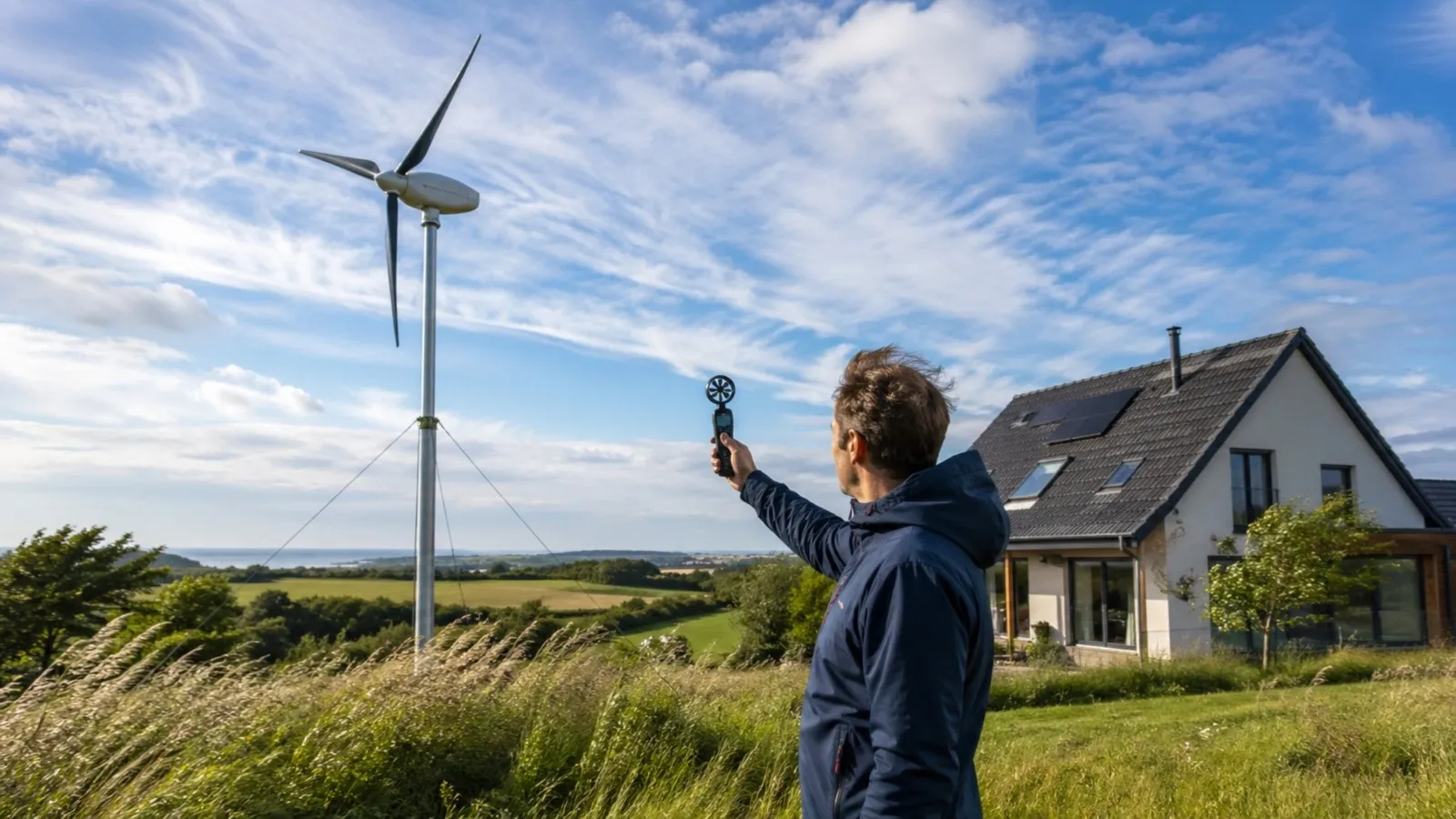
A wind turbine can display 500W, 1000W, or 2000W, but it never produces its maximum power continuously. Its production mainly depends on the actual wind, mast height, surrounding obstacles, turbulence, wiring, regulator, inverter, and possibly batteries.
In other words: before comparing models, you must first understand your wind.
A well-exposed, clear site with regular wind will often yield better results than a confined site surrounded by trees or placed behind a roof. That's why measuring the wind with an anemometer is a simple but very useful step before any purchase.
Why is good wind more important than the advertised power?
The power displayed on a wind turbine generally corresponds to a maximum power, reached under favorable conditions. In actual use, production varies greatly depending on the weather and location.
A wind turbine can spin without producing much. What really matters is the average wind speed, its regularity, the absence of turbulence, installation height, and good compatibility between the wind turbine, regulator, inverter, and batteries.
Weak or irregular wind will result in limited production, even with a powerful wind turbine on paper. Conversely, a more reasonable model may be more consistent if the site is well-exposed.
This is why it's better to choose a wind turbine based on the actual wind of the site, rather than just the advertised power.
What wind speed is needed for a domestic wind turbine?
A domestic wind turbine needs a steady wind to produce properly. It's not just the strength of gusts that matters, but especially the average wind speed on your land.
A site with little wind, below about 18 km/h average wind, will generally yield limited production. The turbine may start to spin, but that doesn't mean it will produce much electricity.
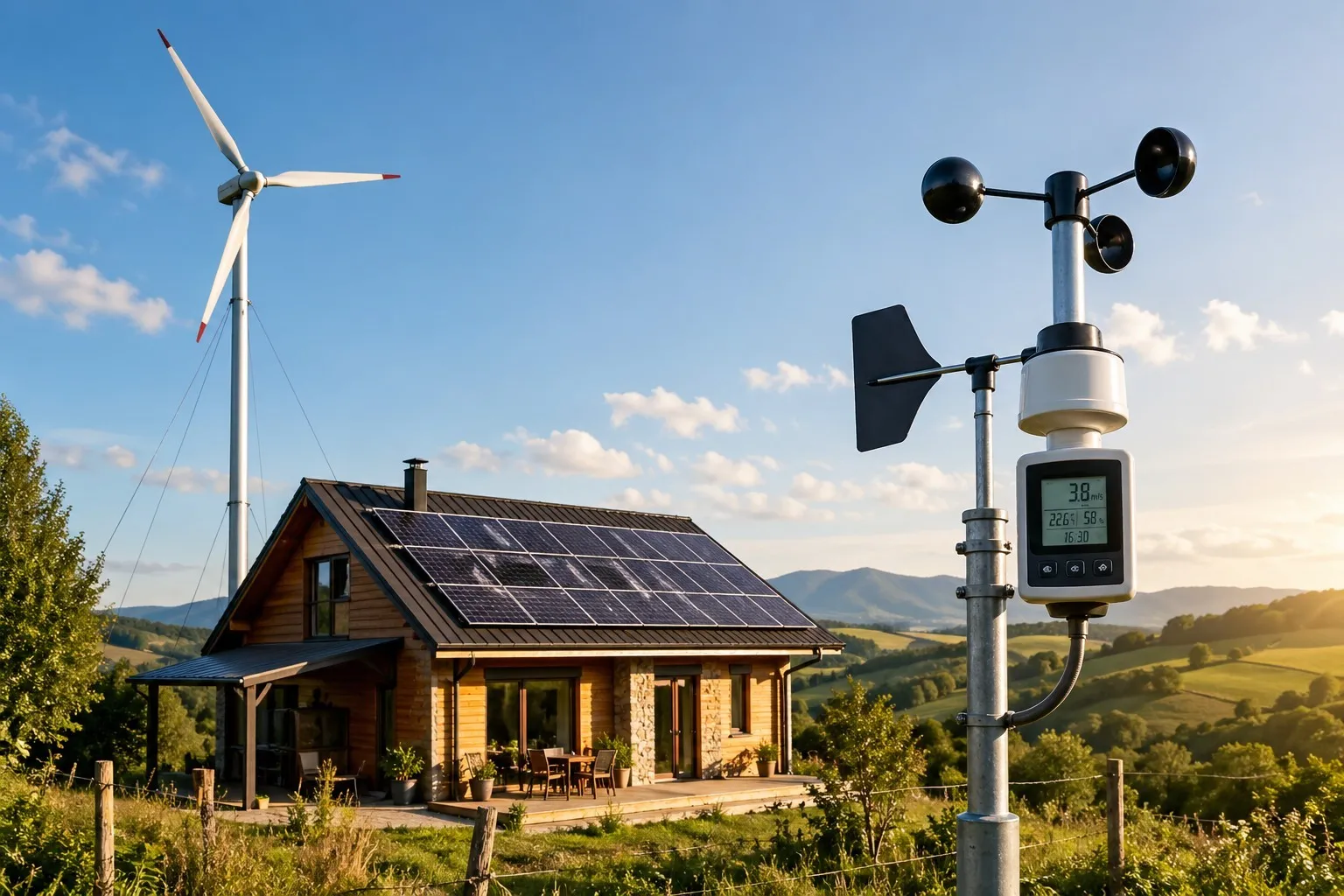
From an average wind between 18 and 25 km/h, the project becomes more interesting. It is often in this range that a small or medium turbine can serve as a supplement, notably around 700 to 1000W, depending on the location, mast, and environment.
If your land often benefits from winds above 25 km/h, a turbine of 1500 to 2000W can be considered, provided you have a clear location, an appropriate mast, and a well-sized installation.
In any case, caution is advised: the advertised power of a wind turbine corresponds to a maximum value, not constant production. To avoid unpleasant surprises, the most reliable approach is to measure the actual wind with an anemometer before choosing the equipment.
How to know if your land has good wind?
The simplest way is not to rely solely on an impression. A garden may seem windy at times but actually be very turbulent or irregular.
To properly assess your land, start by observing nearby obstacles. Trees, walls, houses, hedges, sheds, or terrain can break the wind and create eddies. A wind turbine needs the cleanest air possible to produce properly.
The installation height also plays an important role. The higher and clearer the wind turbine is placed, the more regular the wind. An independent mast in an open area is often preferable to a fixture near a building.
Turbulence must also be considered. A wind that constantly changes direction or comes in gusts is not necessarily ideal. It can make the turbine spin irregularly, reduce production, and increase mechanical stress.
Finally, actual measurement remains the best indicator. An anemometer allows you to measure wind speed directly at the intended installation site. It's the simplest way to avoid choosing a turbine that is too powerful, too weak, or poorly suited.
Why use an anemometer before buying a wind turbine?
An anemometer measures wind speed. It's a simple but very useful tool for validating a wind project.
It helps answer concrete questions: is my land windy enough? Is the wind steady or only present in gusts? Is the chosen area better than another location on the land? Should I aim for a small turbine or a more powerful model? Would a taller mast be useful?

The ideal is to measure the wind as close as possible to the future installation site, if possible at a representative height. The closer the measurement is to real conditions, the more useful it will be for choosing the right equipment.
Before investing in a complete wind turbine, the anemometer thus helps secure your choice. It helps determine if your land truly has good wind and if the wind project is coherent.
Our anemometers for measuring wind
Before choosing a wind turbine, start by checking your wind exposure with an anemometer.
Compact digital anemometer - Accurate wind measurement for wind turbines and leisure
Simple and practical for an initial wind measurement on a field, in a garden, near a mast, or on an isolated site.
Product sheet link:
https://www.comptoireolien.fr/anemometre-17032024401480916.html
Professional Anemometer - Wind, Temperature & Humidity Measurement
More comprehensive, it allows you to monitor the wind with more information, including temperature and humidity. It's a good choice if you want to better understand your site before selecting a wind turbine.
Product sheet link:
https://www.comptoireolien.fr/anemometre-professionnel-mesure-du-vent-temperature-humidite-15728.html
Where to install a wind turbine to benefit from better wind?
The choice of location is as important as the choice of the wind turbine.
In most cases, it's better to favor an open area, an independent mast, sufficient height, and distance from trees, walls, and buildings.
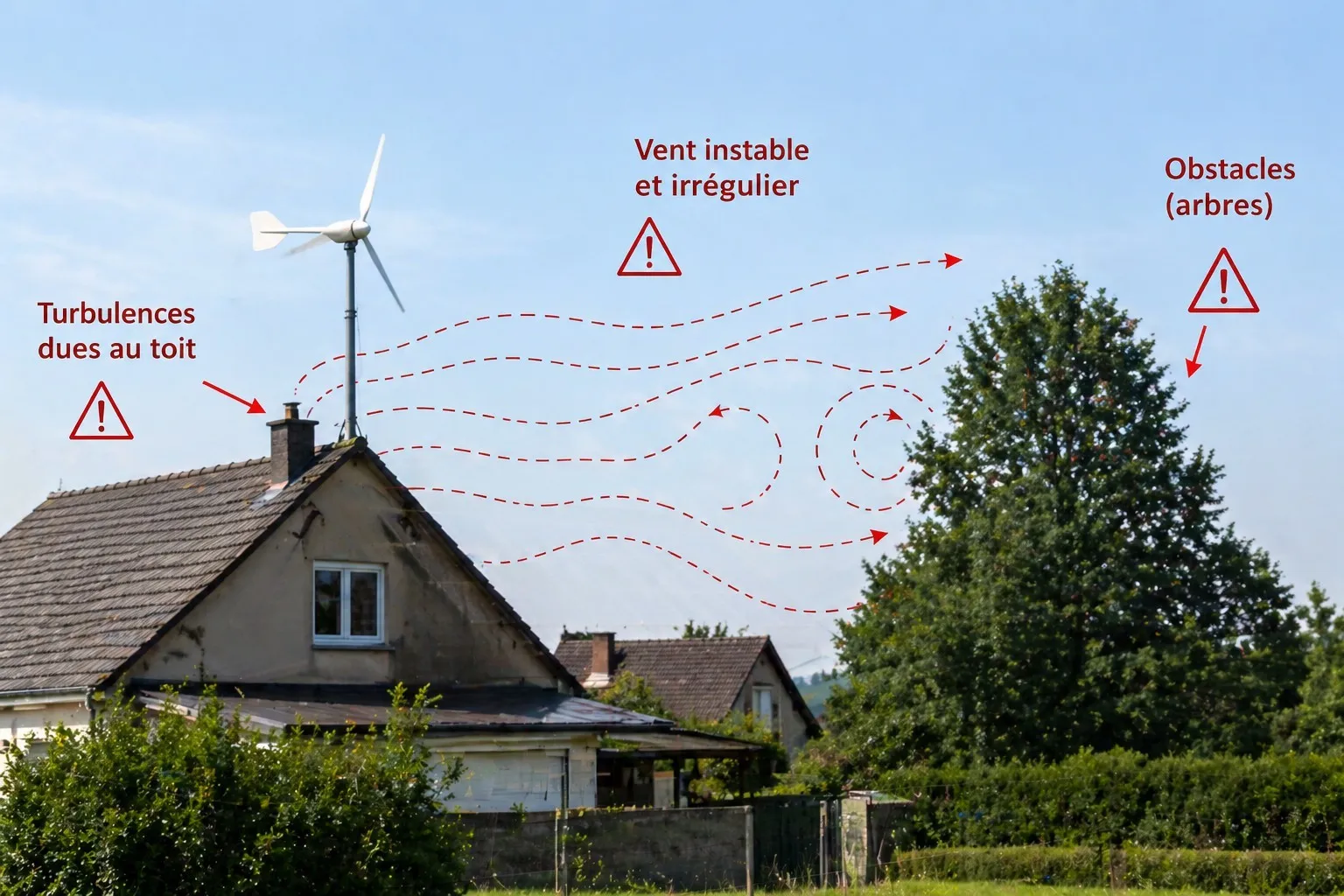
Installations on gables, walls, or roofs may seem practical, but they are often less favorable. Buildings create turbulence, transmit vibrations, and impose mechanical stress on the fixings.
Before any fixing on a structure, a serious mechanical check is necessary. For better production, it is generally preferable to install the wind turbine on an independent mast, in an open area exposed to prevailing winds.
Useful guide:
https://www.comptoireolien.fr/eoliennes-de-pignon-attention.html
Good wind speed: which wind turbine to choose next?
Once your wind is measured, you can choose more confidently.
If your land is moderately windy, a small wind turbine may suffice as a supplement. If your site is very exposed, higher power can be considered. If the wind is irregular, turbulent, or too weak, caution is needed, and oversizing should be avoided.
For a house connected to the grid, you can check the self-consumption wind turbine kits:
https://www.comptoireolien.fr/kits-reseau-eolien-autoconsommation.html
For a cabin, an isolated site, or an installation with batteries, look at the wind turbine kits for isolated sites:
https://www.comptoireolien.fr/kits-eoliens-sites-isoles.html
In any case, the wind turbine must be connected with suitable equipment. A wind turbine is not directly connected to an MPPT solar regulator, an electric station, a battery, or a converter not designed for wind power.
An installation on batteries requires an adapted wind regulator and a consistent voltage: 12V, 24V, or 48V.
Estimating the production of a wind turbine
Even with a good wind measurement, a fixed production should not be promised. Two fields located in the same municipality can yield different results depending on obstacles, height, orientation, and turbulence.
To get a first estimate, you can use our simulator:
https://www.comptoireolien.fr/simulateur-eolien-production-rentabilite.html
This simulator helps to better visualize the impact of wind on possible production, without replacing an actual on-site measurement.
Common mistakes to avoid
Choosing solely based on power
A 2000W wind turbine is not necessarily better than a 1000W one if the wind is weak or irregular. It's better to adapt the power to the site.
Installing too low
A mast that is too low often captures disturbed wind. The more regular the air, the better the production will be.
Installing too close to a building
Roofs, walls, and gables create turbulence. This can reduce efficiency and increase vibrations.
Confusing strong wind with good wind
A good wind is not just a strong wind. It is mainly a regular, clean, and exploitable wind.
Not measuring before purchase
An anemometer costs little compared to a complete installation. It is often the first tool to buy before choosing a wind turbine.
Before installing an individual wind turbine, measure your wind
Having a good wind is the foundation of a successful wind project. Before choosing a power or a kit, take the time to check your site with an anemometer.
A well-cleared site, regular wind, and an adapted installation will always yield better results than a purchase based solely on the advertised power.
Start by measuring your wind, then choose the wind turbine that truly matches your site, your voltage, and your usage.