
Skip to content

Solar, Wind, and Hybrid Wiring Diagrams

Clear diagrams to better understand the connection of your wind, solar, hybrid kits, and autonomous systems.

Find here our main wiring diagrams to understand the connection of a solar, wind, or hybrid installation: off-grid with batteries, 230V self-consumption, 400V three-phase, regulator, inverter, diode bridge, discharge resistor, wattmeter, and protection accessories.

These diagrams are provided for informational purposes to visualize the operating principle of different kits and equipment. The final wiring must always be adapted to the equipment manual, the installation's power, necessary electrical protections, and current standards.
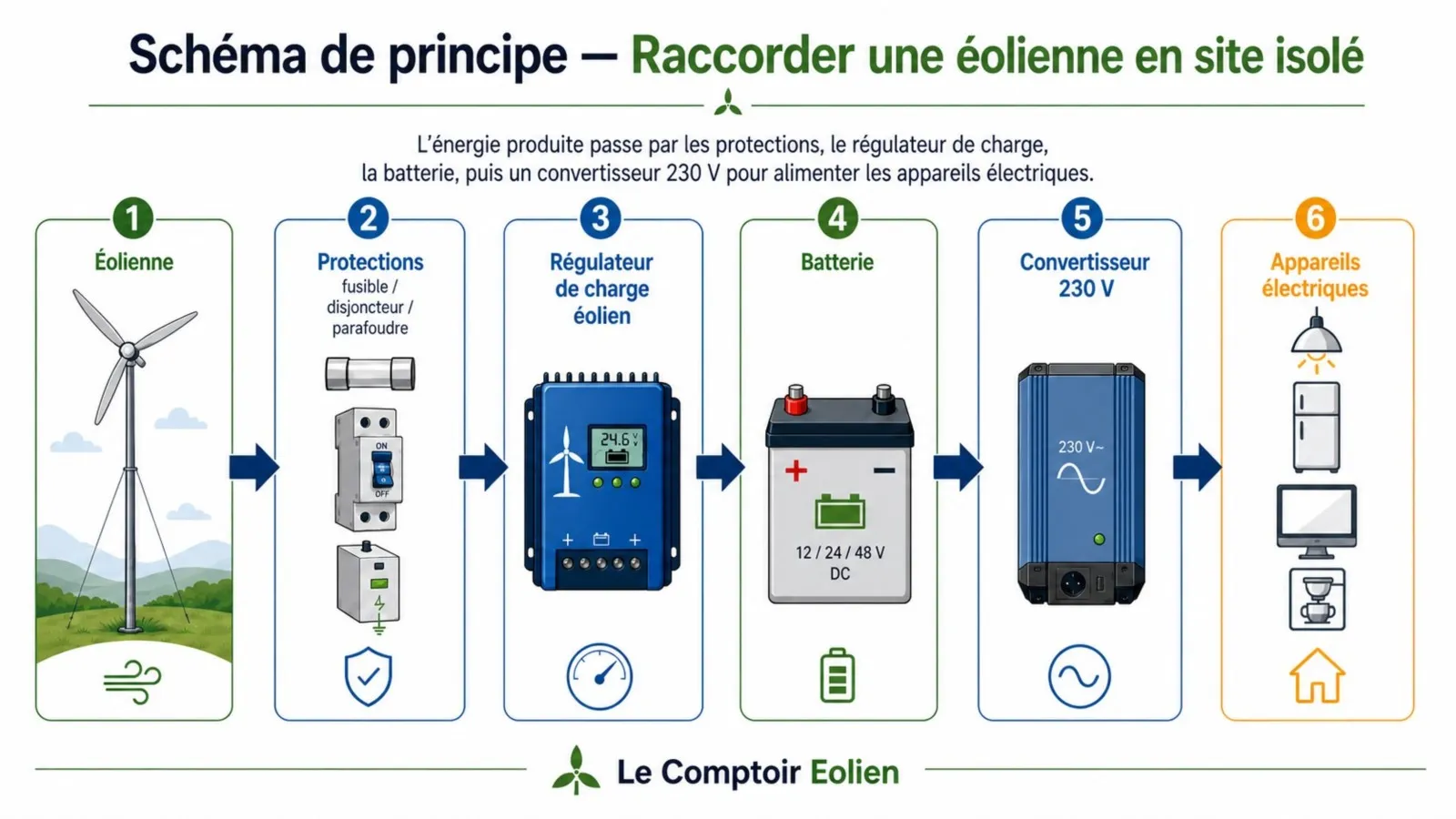
Wiring diagram for isolated site wind kit with battery regulator protection and 230V converter

Basic diagram for connecting a wind turbine in an off-grid site: the energy produced passes through protections, the charge controller, the battery, then a 230V converter to power electrical devices.
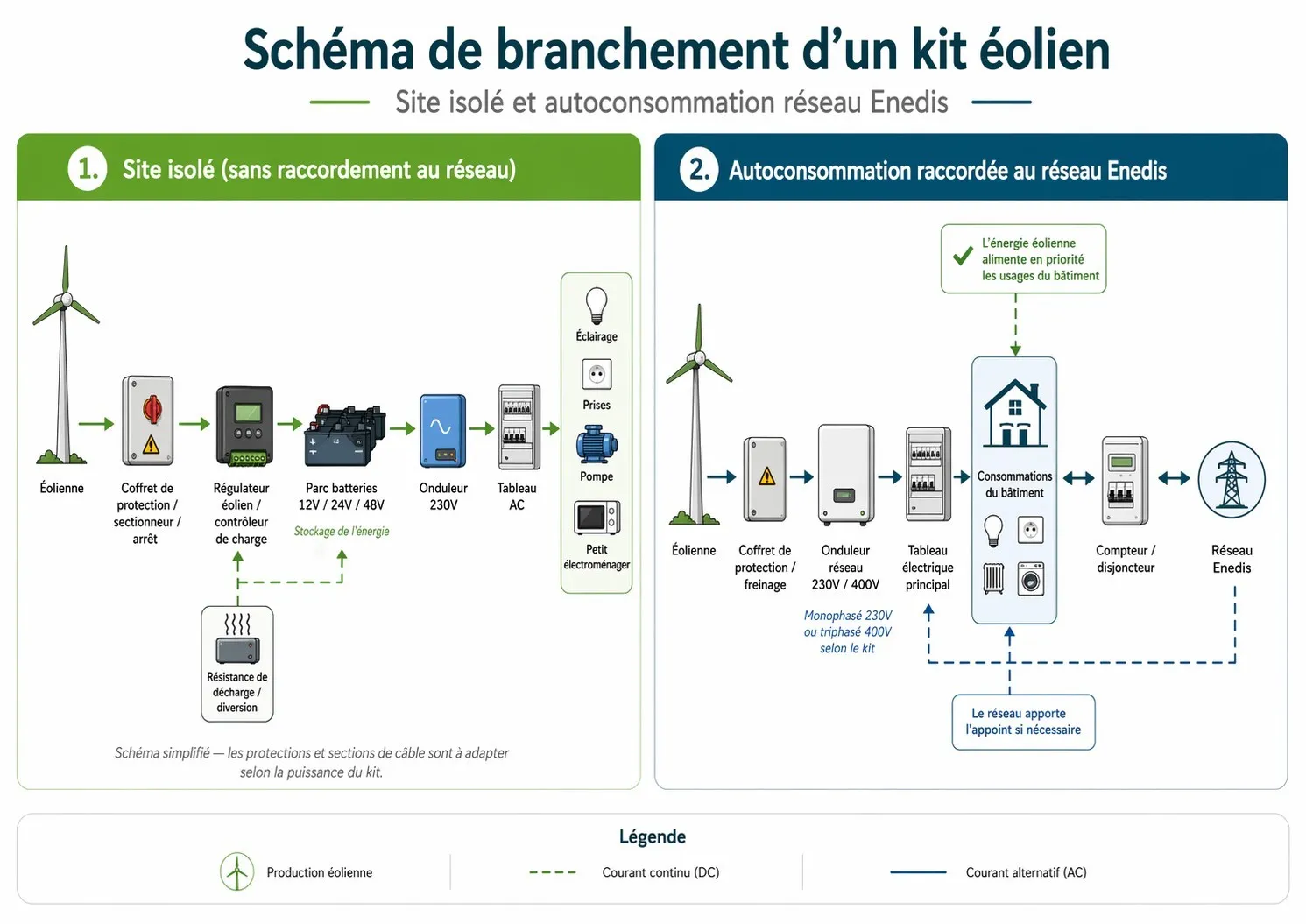
Wiring diagram for isolated site wind kit and self-consumption connected to the Enedis grid

This diagram presents two possible configurations for a wind kit: an autonomous installation with batteries or an installation connected to the Enedis network for building self-consumption.
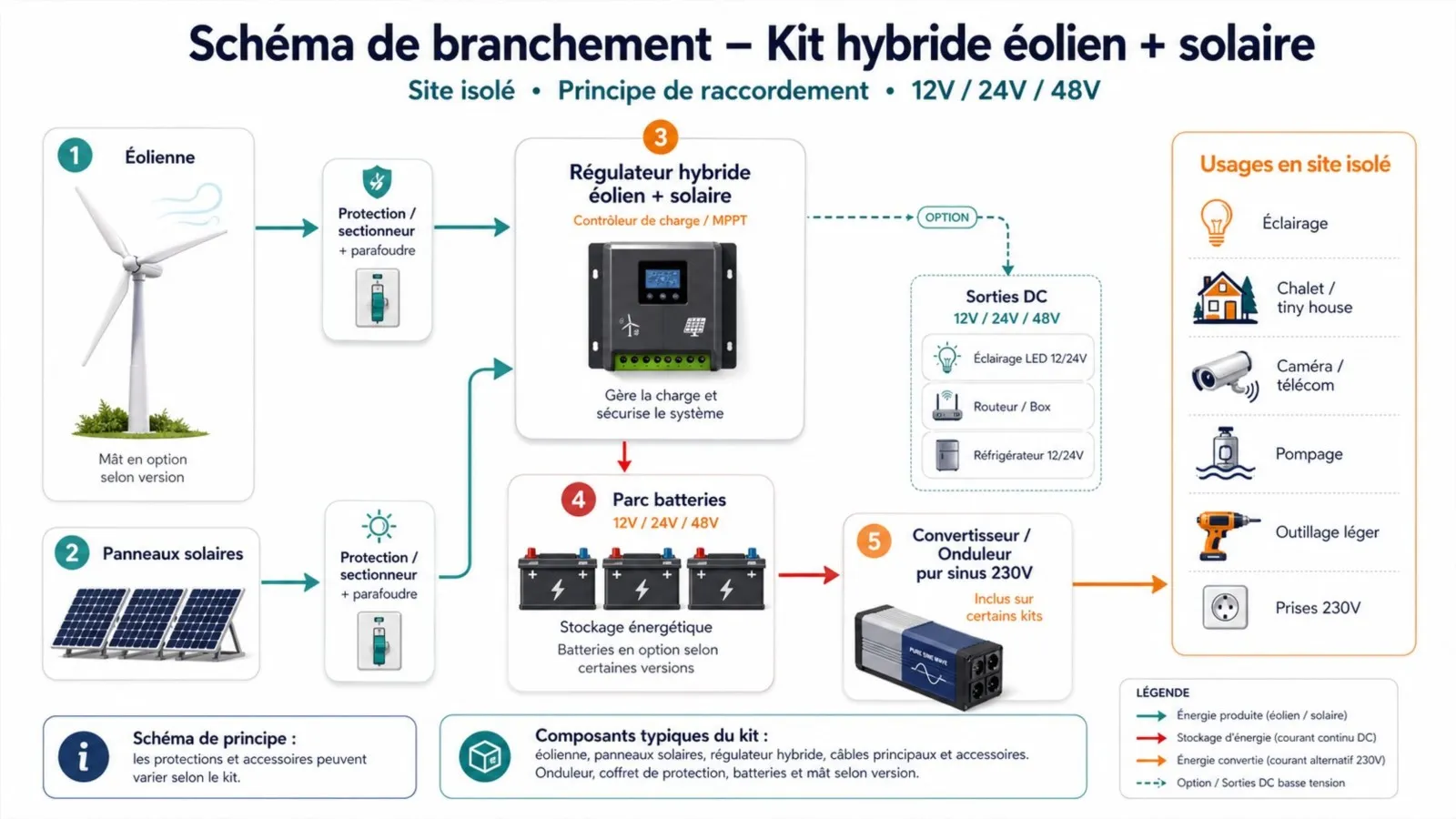
Wiring diagram for hybrid wind-solar kit with hybrid regulator, batteries, and 230V inverter

Basic diagram of a hybrid kit combining a wind turbine and solar panels. The production allows charging the batteries via a hybrid regulator and powering low voltage or 230V equipment.
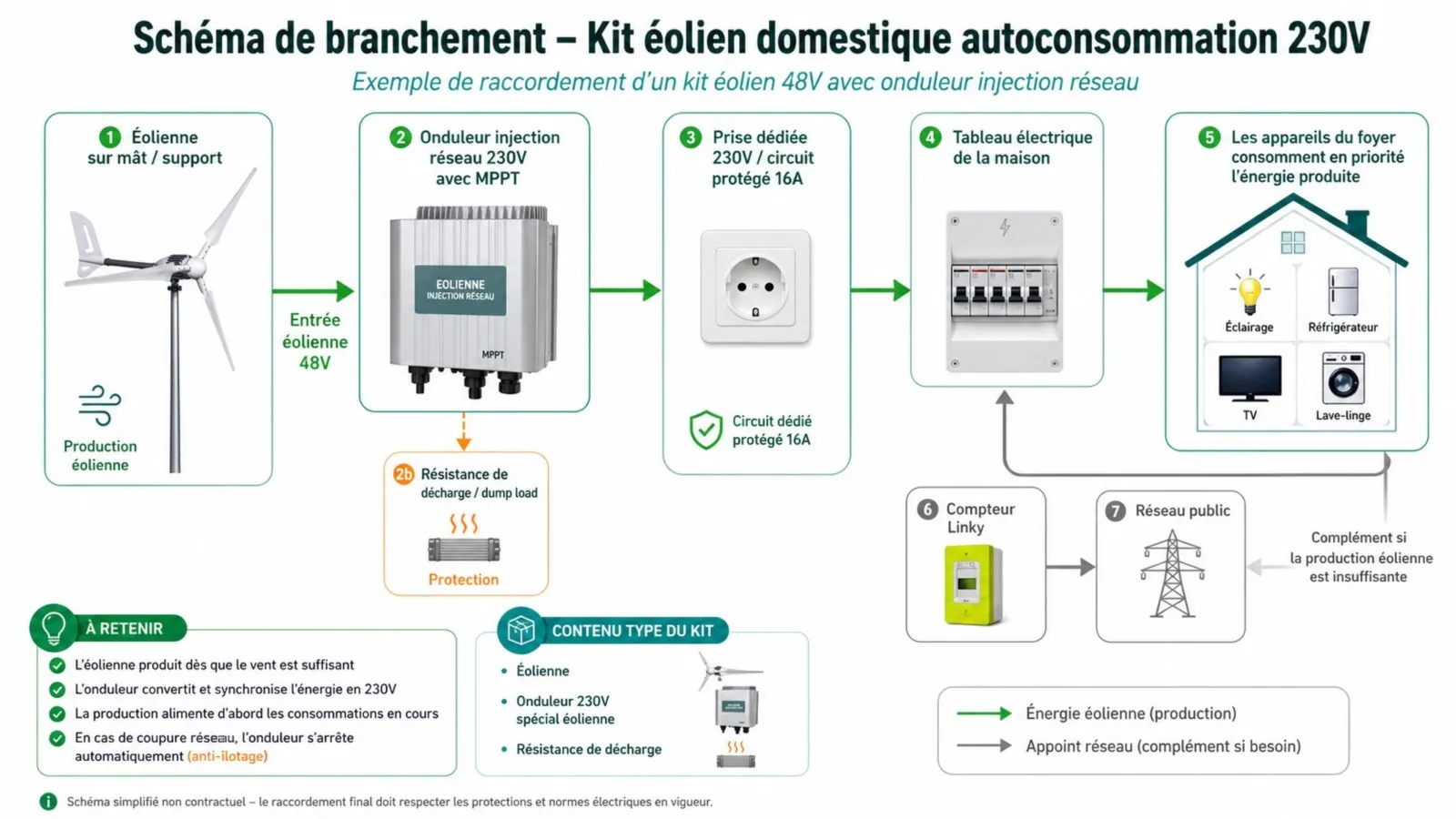
Wiring diagram for domestic wind kit self-consumption 230V with grid inverter and Linky meter

Basic diagram of a domestic wind kit in 230V self-consumption. The energy produced by the wind turbine is converted by the grid inverter, then consumed primarily by household devices.

Wiring diagram for wind kit grid self-consumption single-phase 230V and three-phase 400V with 3 inverters

This diagram compares the connection of a grid wind kit in single-phase 230V and three-phase 400V. In three-phase, the installation uses 3 inverters to distribute the production across the phases.

Wiring diagram for hybrid wind-solar kit isolated site and self-consumption with batteries and hybrid inverter

Basic diagram of a hybrid wind and solar kit, usable in an off-grid site with batteries or in self-consumption with storage depending on the chosen configuration.
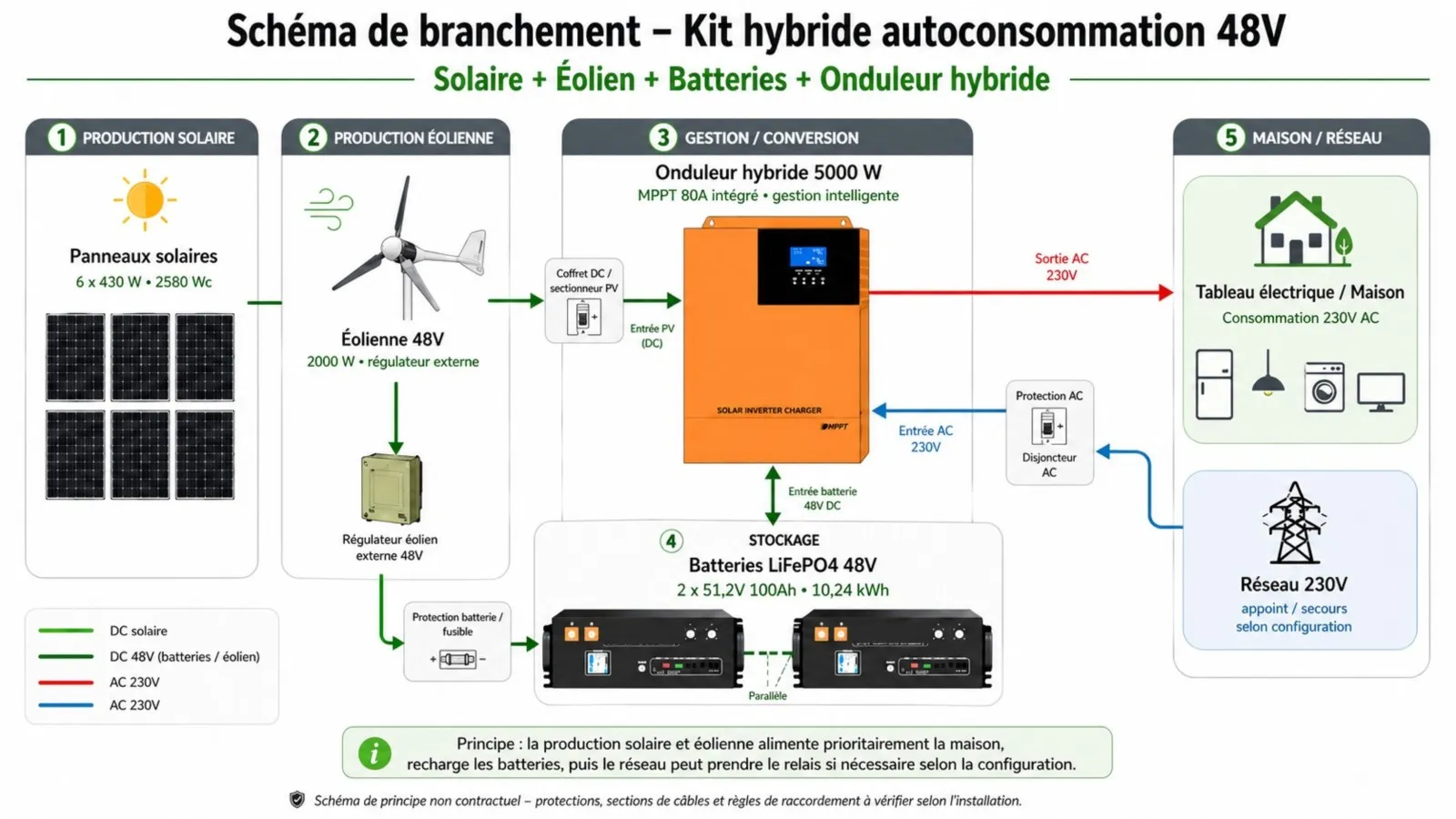
Wiring diagram for hybrid self-consumption kit 48V with solar panels, wind turbine, LiFePO4 batteries, and hybrid inverter

Basic diagram of a hybrid kit in 48V self-consumption combining solar panels, wind turbine, LiFePO4 batteries, and hybrid inverter to power the house in 230V.
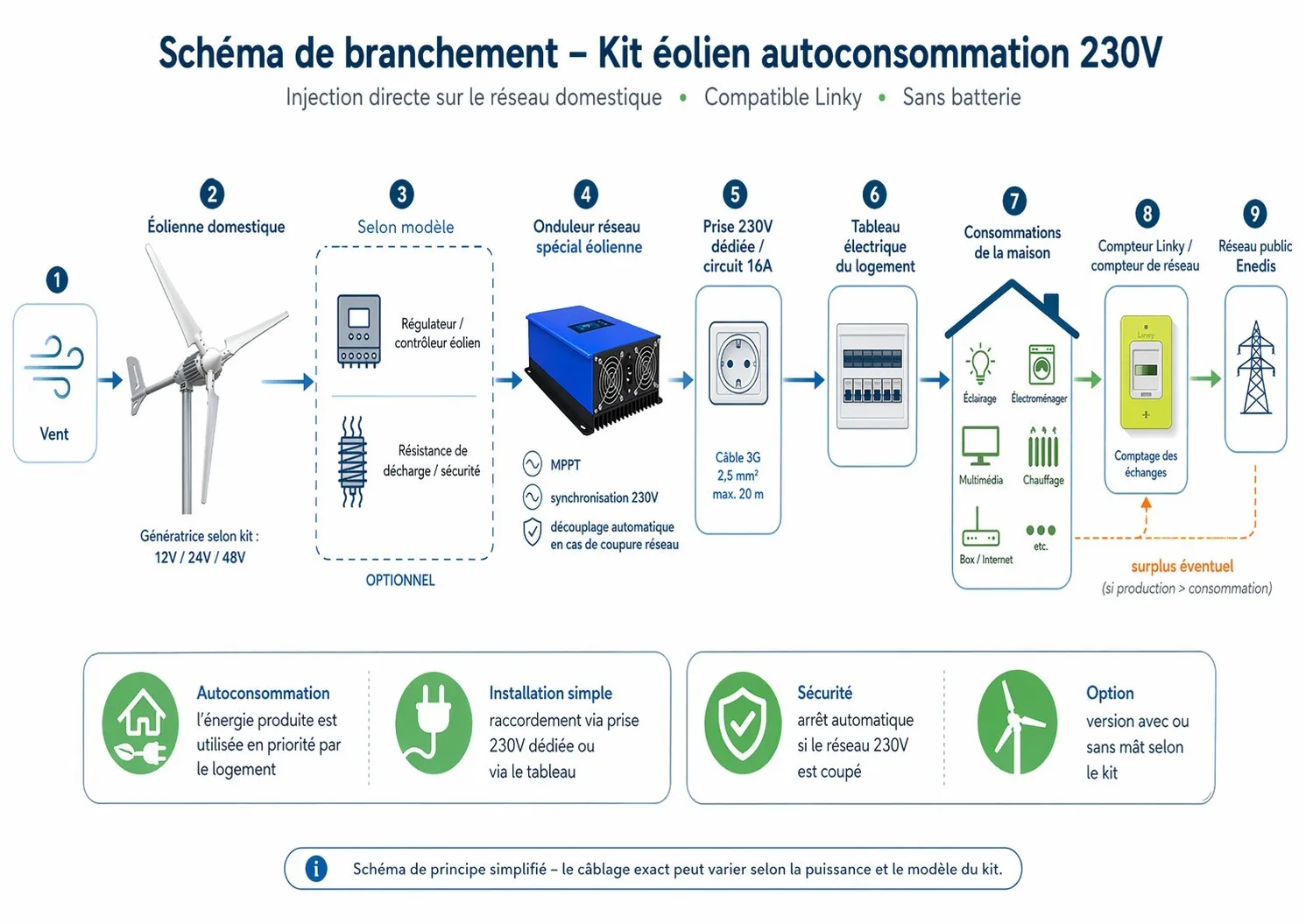
Wiring diagram for wind kit self-consumption 230V without battery with grid inverter compatible with Linky

Wiring diagram of a wind kit in 230V self-consumption without battery. The energy produced by the wind turbine is converted by the grid inverter then consumed primarily in the home.
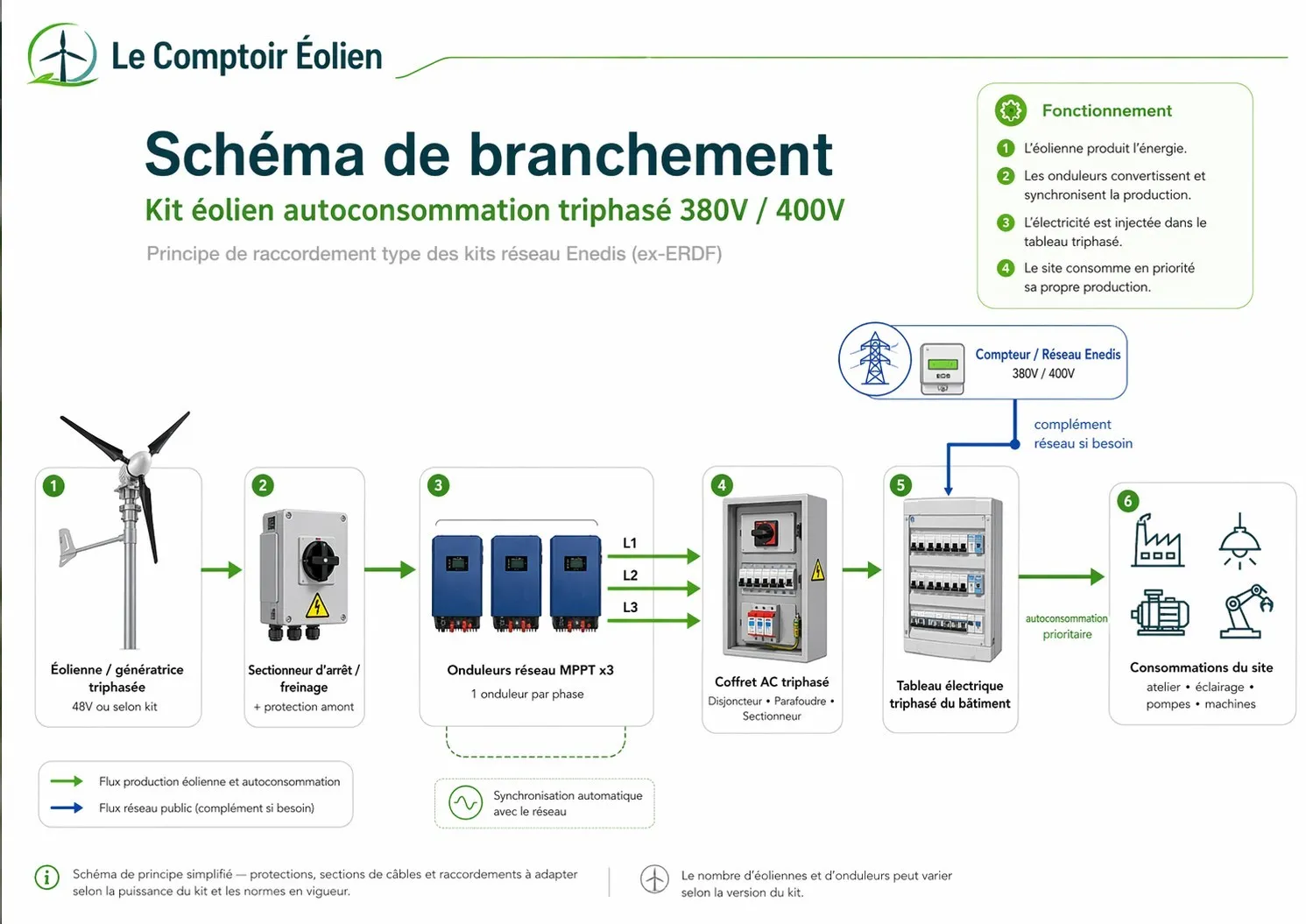
Wiring diagram for wind kit self-consumption three-phase 380V 400V with three grid inverters and electrical protections

Basic diagram of a wind kit in three-phase 380V / 400V self-consumption. The production is distributed across the three phases thanks to three grid inverters, with appropriate protections.
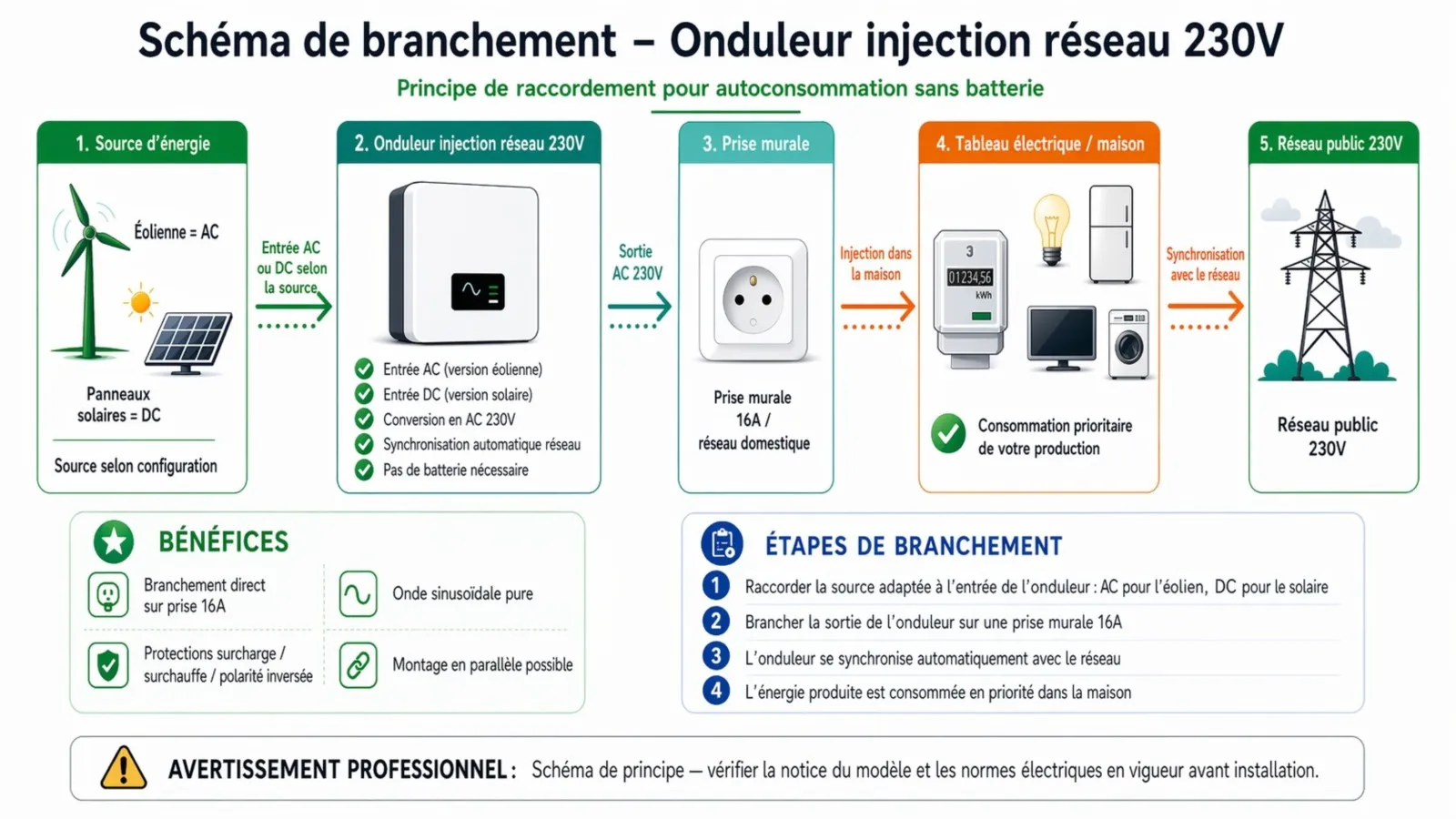
Wiring diagram for grid injection inverter 230V for AC wind turbine or DC solar panels

Basic diagram for connecting a 230V grid-tie inverter. Depending on the energy source, the input can be AC for a wind turbine or DC for solar panels.
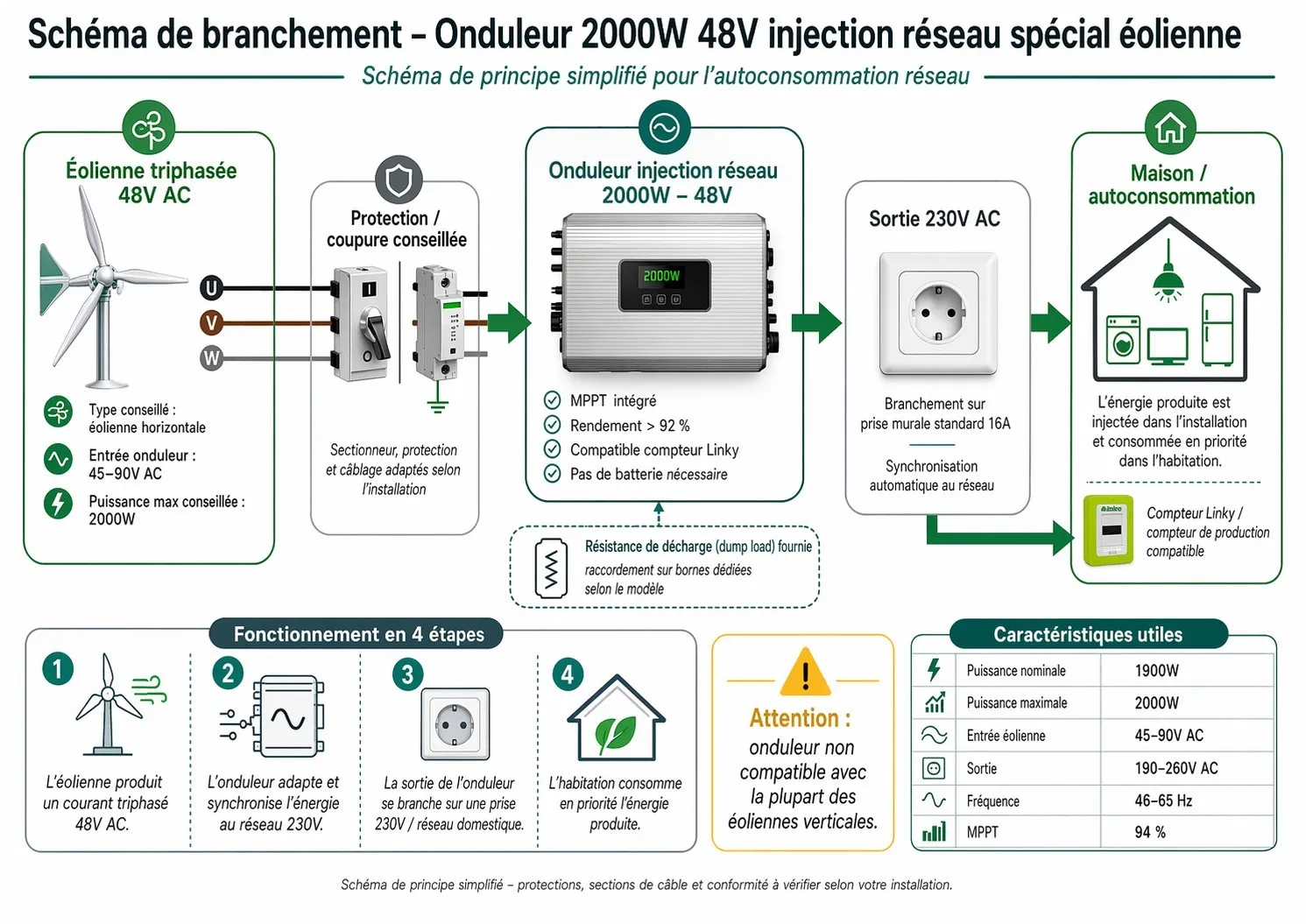
Wiring diagram for 2000W 48V inverter grid injection special for wind turbine with protection and 230V self-consumption

Wiring diagram of a 2000W 48V inverter special for wind turbine for grid self-consumption. The energy produced is converted to 230V then consumed primarily in the home.
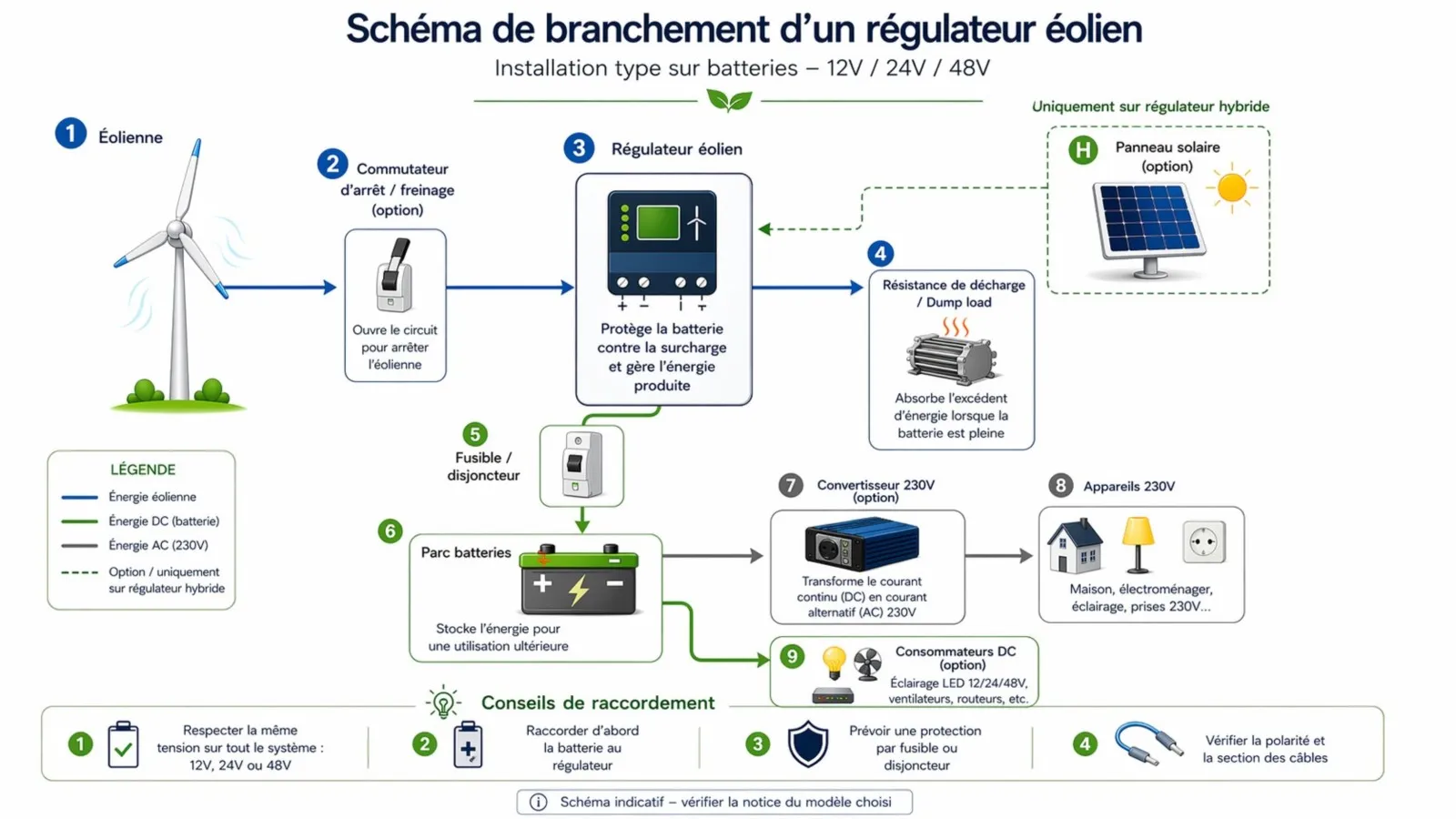
Wiring diagram for wind turbine controller with battery stop switch, discharge resistor, and 230V converter

Basic diagram for connecting a wind regulator to batteries. The regulator protects the battery, manages the charge, and can control a discharge resistor depending on the model.
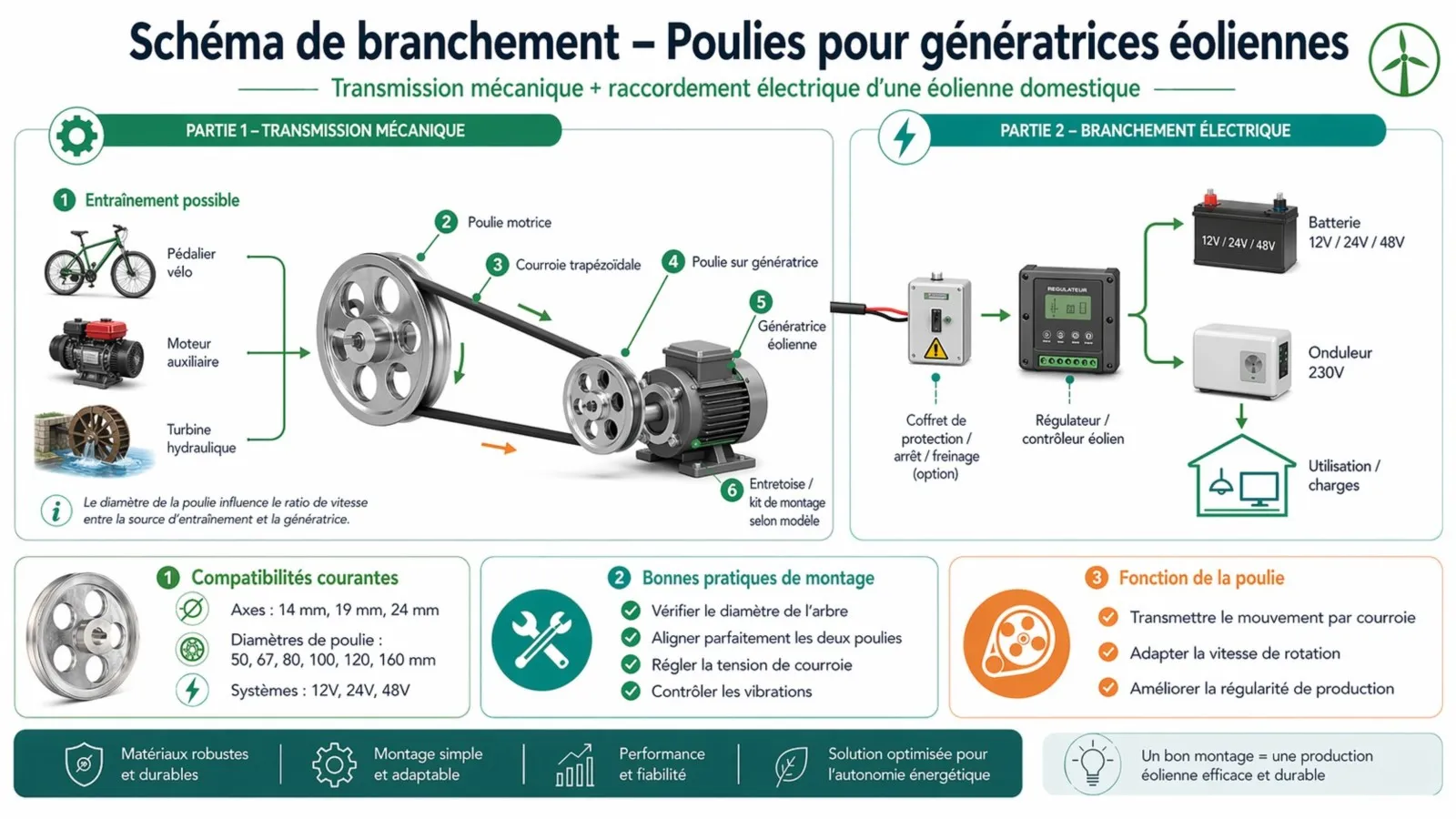
Wiring diagram for pulleys for wind turbine generator with belt transmission, battery regulator, and 230V inverter

Basic diagram for using pulleys with a wind generator. The belt transmission allows adjusting the rotation speed from a wind turbine, a bicycle, a motor, or a hydraulic turbine before electrical connection.
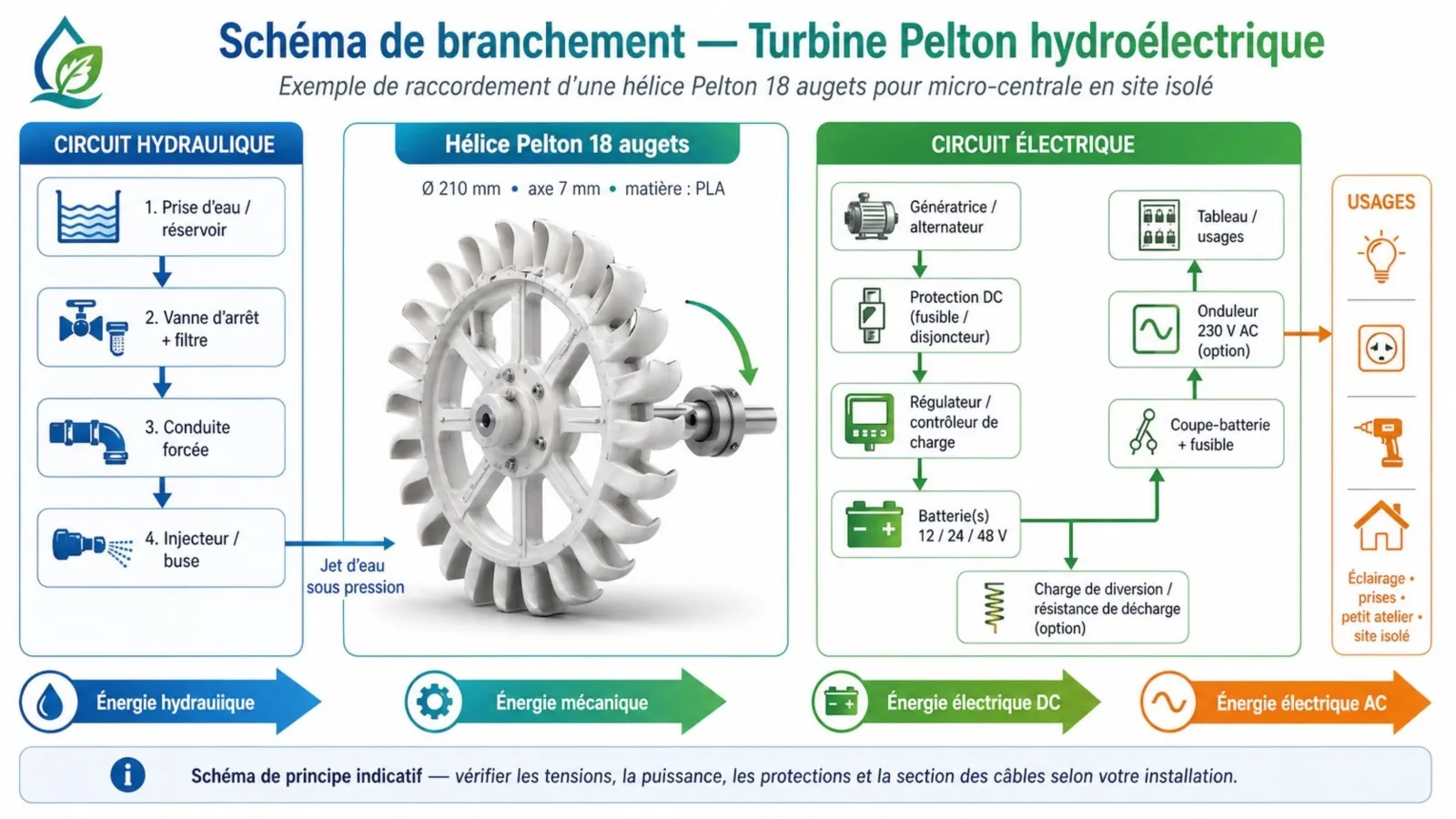
Wiring diagram for Pelton hydroelectric turbine with generator, battery regulator, discharge resistor, and 230V inverter

Basic diagram of a Pelton hydroelectric turbine for an isolated site. The pressurized water drives the Pelton wheel, which activates a generator to produce electricity stored in batteries or converted to 230V depending on the installation.

Wiring diagram for single-phase and three-phase diode bridge rectifier to convert AC current to DC current

Wiring diagram of a single-phase or three-phase rectifier diode bridge. It allows converting the AC current from a generator or wind turbine into DC current before regulation or battery storage.
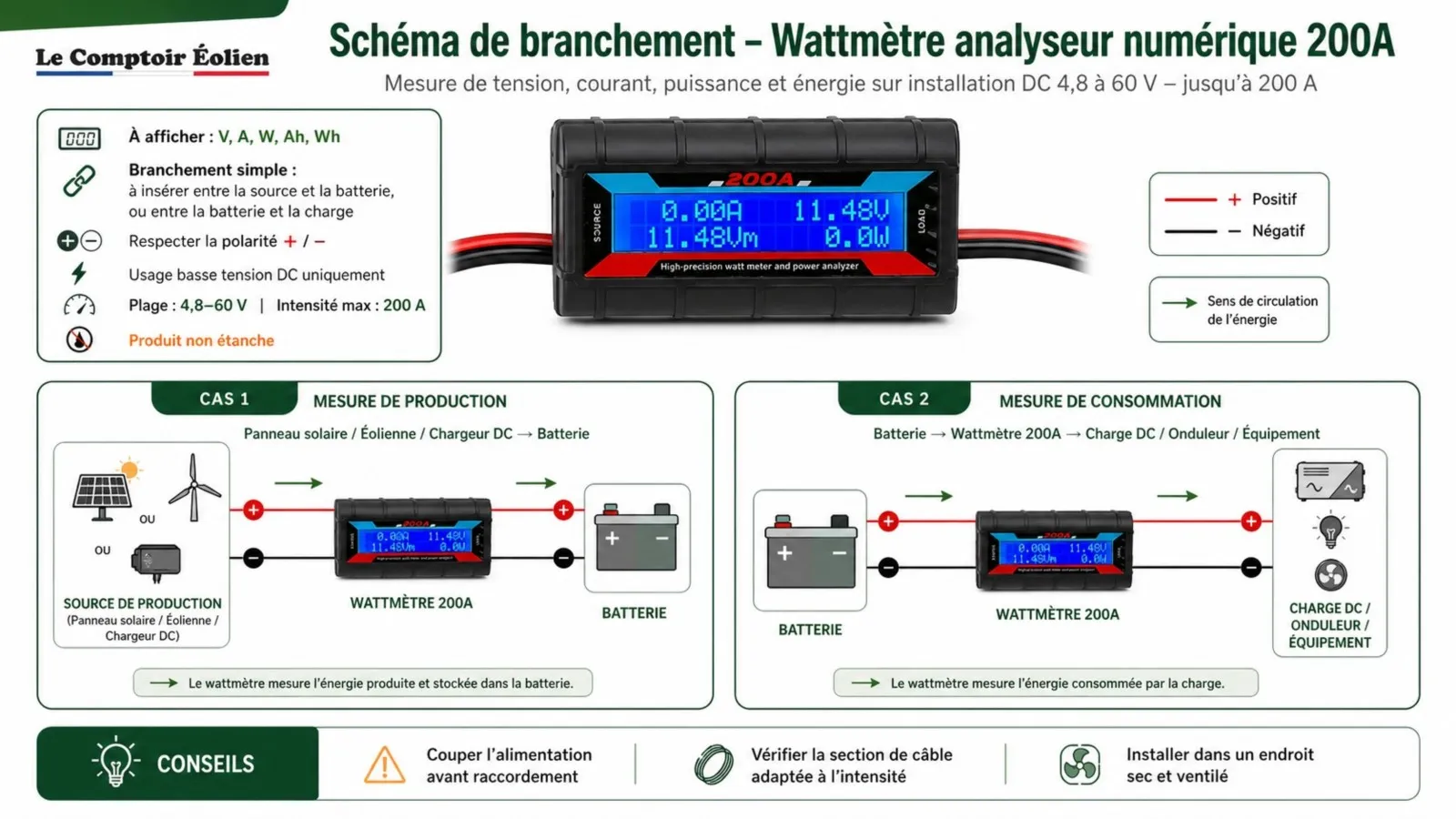
Wiring diagram for 200A digital wattmeter analyzer to measure production, consumption, battery, solar panel, and wind turbine

Schematic diagram for connecting a 200A digital wattmeter analyzer. It measures voltage, current, power, and energy produced or consumed in a low voltage DC installation.
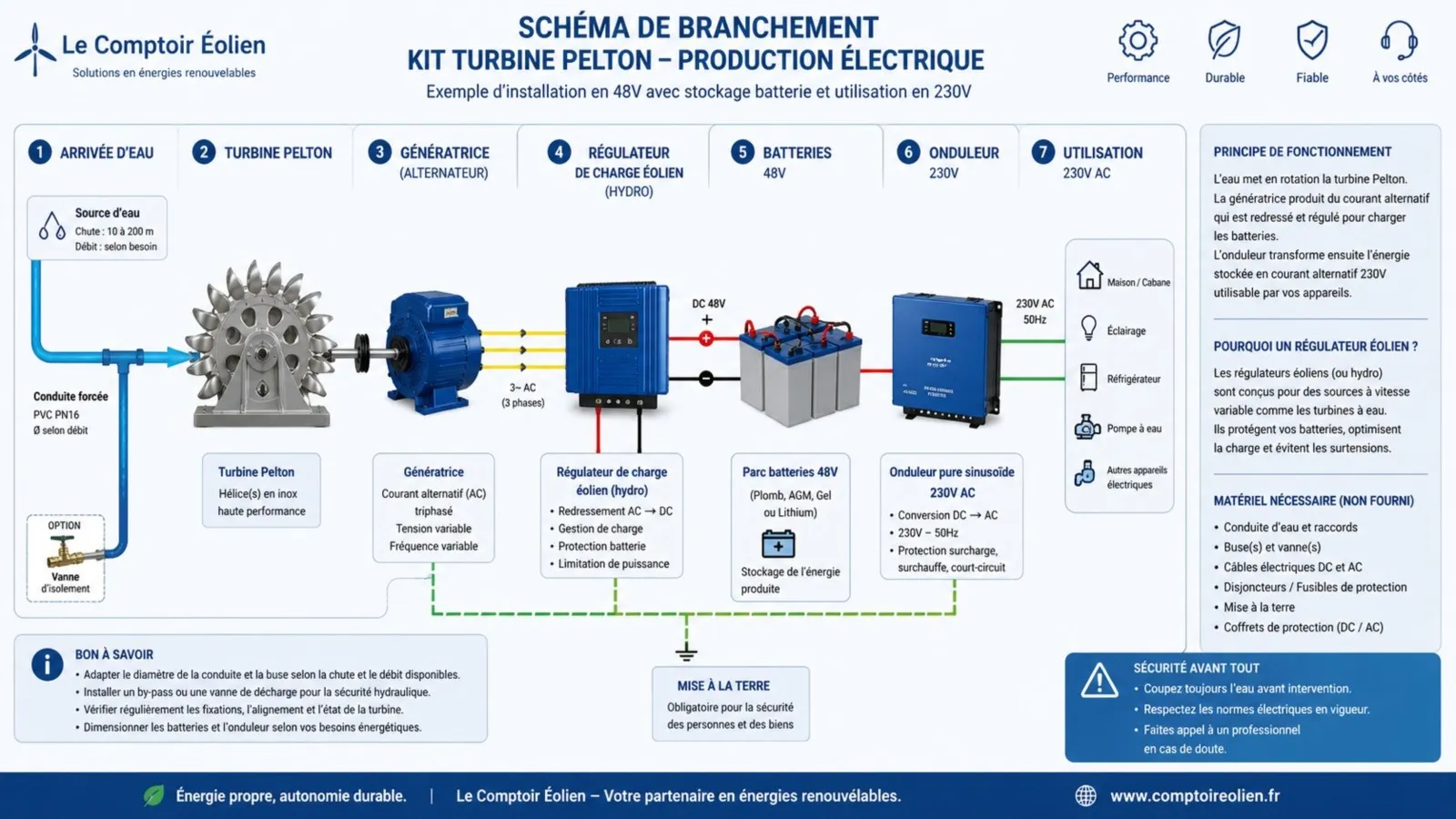
Wiring diagram for Pelton hydroelectric turbine kit with three-phase generator, 48V battery regulator, and 230V inverter

Schematic diagram of a Pelton turbine kit for electricity production in isolated sites. Water rotates the turbine, which drives a three-phase generator; the energy is then rectified and regulated to charge a 48V battery bank, then converted to 230V to power electrical devices.

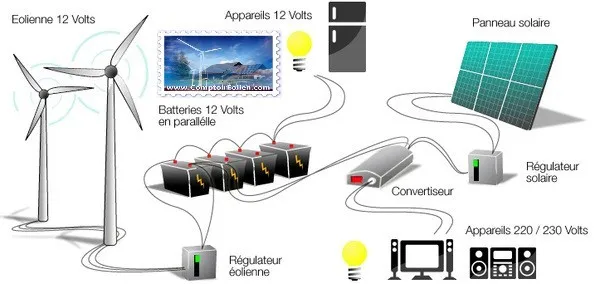
Wind turbine connection diagram in 12V
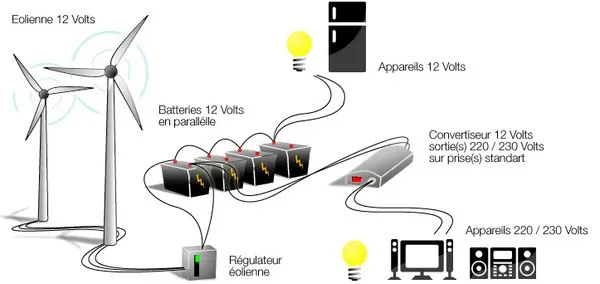
wiring diagram for 12V wind turbine in isolated site
Technical document

Wind and solar wiring diagram in 12V

wiring diagram for 12V wind turbine and solar

Hybrid wind and solar connection diagram in 12V with 6 batteries
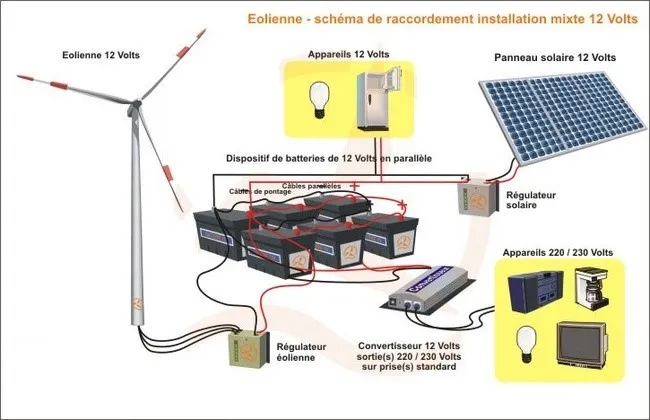
hybrid connection diagram for 12V wind and solar with a 6-battery bank

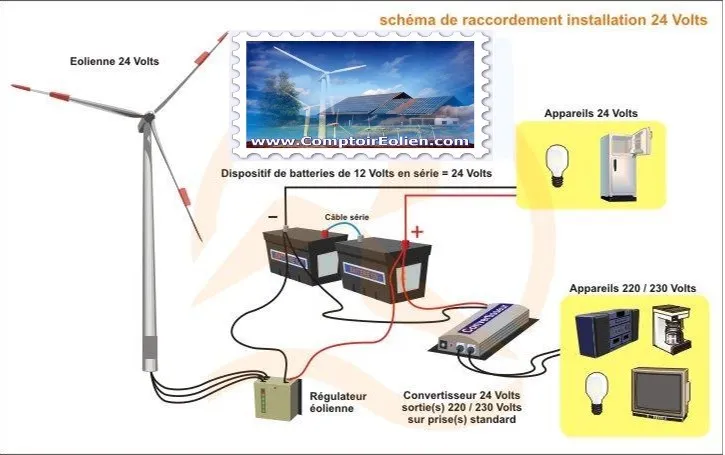
Wind turbine wiring diagram in 24V

wiring diagram for 24V wind turbine

Hybrid wind and solar wiring diagram in 24V
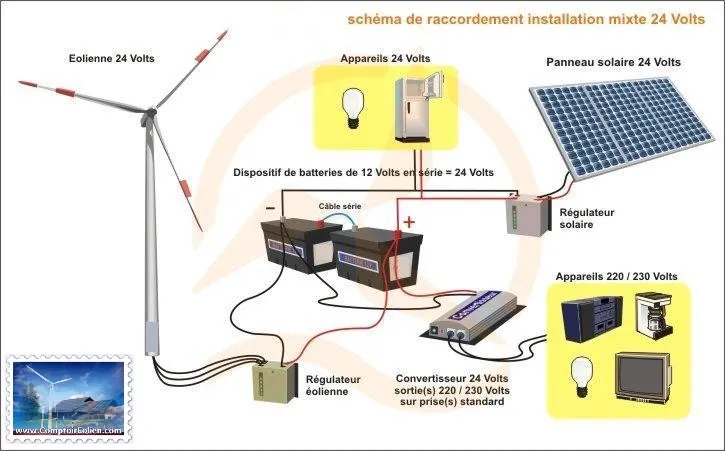
wiring diagram for 24V wind and solar

Wind and solar connection diagram in 48V
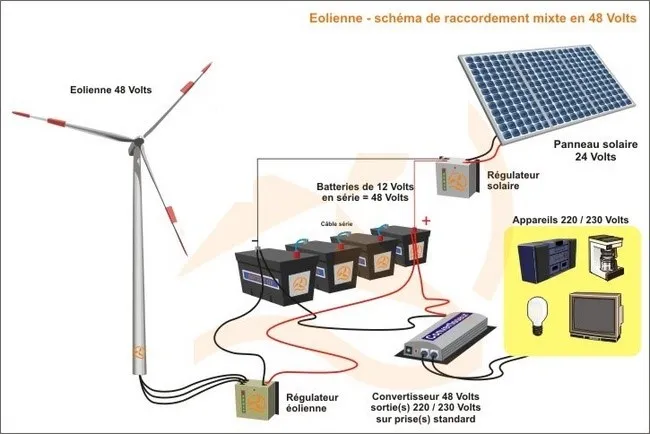
wiring diagram for 48V hybrid wind and solar

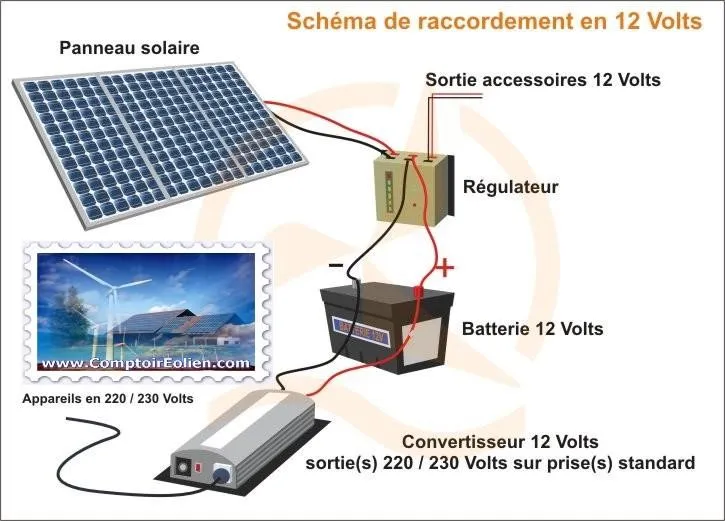
Solar wiring diagram in 12V

wiring diagram for solar panel

Frequently Asked Questions

What are the purposes of solar, wind, and hybrid wiring diagrams?
These diagrams help to better understand the connection principle of a solar, wind, or hybrid installation. They show the main components of a system: wind turbine, solar panels, regulator, battery, inverter, electrical protections, diode bridge, discharge resistor, or wattmeter depending on the configuration.
What is the difference between an off-grid installation and a self-consumption installation?
An off-grid installation generally works with batteries to store the energy produced by the wind turbine or solar panels. A self-consumption installation is connected to the home's electrical grid and allows direct consumption of the produced energy, often via a 230V grid inverter or a 400V three-phase configuration.
Why are there different diagrams for 12V, 24V, and 48V?
The system voltage depends on the installation's power, the battery bank, and the equipment used. 12V is suitable for small installations, 24V helps limit current for medium needs, and 48V is often used for more powerful installations to reduce losses in cables.
How does a hybrid wind and solar kit work in an off-grid setting?
A hybrid kit combines a wind turbine and solar panels to produce energy from two complementary sources. The energy is generally sent to a charge controller or an adapted management system, then stored in batteries before being used at low voltage or converted to 230V with an inverter.
Do solar panels always need to be connected to the wind regulator?
No, it depends on the type of kit and the equipment used. In some hybrid systems, solar panels can be connected directly to the inverter or a dedicated solar regulator, without going through the wind regulator. Always refer to the diagram corresponding to the product and the manufacturer's instructions.
How to connect a 230V wind kit for self-consumption without a battery?
In a 230V self-consumption configuration without a battery, the energy produced by the wind turbine is sent to a suitable grid inverter. The inverter converts this energy to primarily power the household's electrical devices, with the necessary protections according to the installation.
How does a three-phase 380V or 400V wind turbine connection work?
For a three-phase 380V or 400V self-consumption wind turbine installation, the production must be distributed across the three phases. Depending on the kits, this may require three grid inverters, one inverter per phase, to ensure an appropriate distribution of the produced energy.
What is the role of a rectifier diode bridge in a wind turbine installation?
The rectifier diode bridge allows the conversion of AC alternating current produced by a generator or wind turbine into DC direct current. It is used before certain regulators, batteries, or equipment requiring a direct current supply.
What is the purpose of a dump load resistor?
A dump load resistor, also known as a dump load, allows the dissipation of excess energy when the batteries are charged or when the regulator needs to protect the installation. It helps prevent overvoltages and contributes to the safety of the wind or hybrid system.
What is the purpose of a wattmeter in a solar or wind installation?
A wattmeter measures electrical information such as voltage, current, instantaneous power, and energy produced or consumed. It is useful for monitoring the operation of a solar, wind, hybrid installation, or a low-voltage system with batteries.
Do wiring diagrams replace the equipment manual?
No, the diagrams are provided as a guide to help understand the connection principle. The final wiring must always be adapted to the equipment manual, the installation's power, the necessary electrical protections, and the applicable standards.

Your legal guarantee rights

Your legal guarantee rights

europa.eu/youreurope/citizens/consumers/shopping/guarantees/index_en.htm