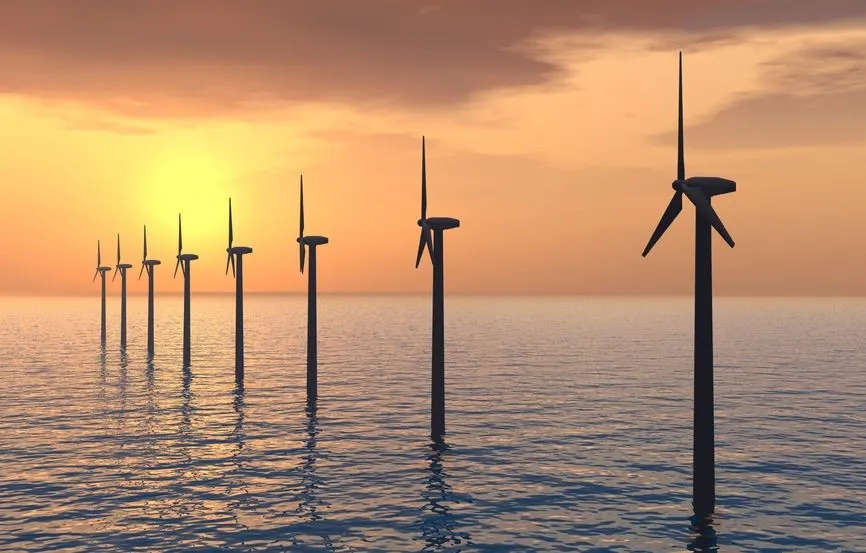

Misconceptions
Wind energy is non-polluting, it reduces the load on the grid, decreases the use of fossil fuels, and slows the construction of hydroelectric dams and nuclear power plants. The wind systems available on the market require minimal care from the owner. Wind turbines are equipped with simple control systems that ensure safe and reliable operation.
The ecological interest of small wind turbines is no longer in question! No CO2 production, fully renewable energy, no harm to the environment, zero impact on fauna and flora, small wind turbines win all the good conduct awards!
Misconception: Wind turbines are noisy
At the base of a wind turbine, the noise level is equivalent to that inside a car. It's a noise level that doesn't prevent having a conversation.
In fact, at the base of a modern wind turbine, the sound of the wind is often more disturbing than the sound of the turbine itself. Wind turbines operate when there is wind. At those times, the wind rustles the leaves of trees, whistles through power and telephone lines, and stirs the elements of the environment. All these sounds tend to cover the noise of the wind turbines.
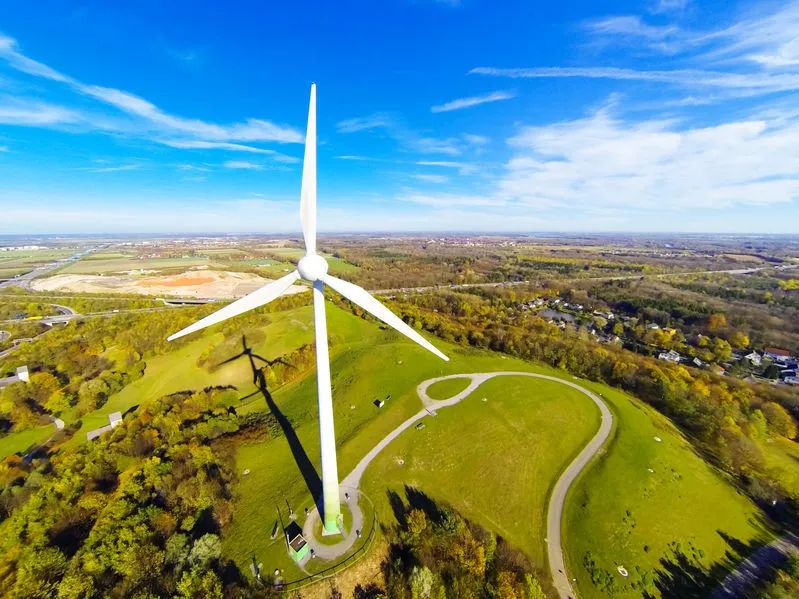
Generally, there is noise attenuation depending on the distance. It's within the first few hundred meters that the noise decreases the most. The operation of a wind farm causes levels of about 45 dB(A) at 300 or 400 m, which is less than the ambient level in an ordinary office. The maximum emergence (the "noise nuisance" at the level of residents) tolerated by the regulations is very restrictive (legislation further reinforced by the decree on neighborhood noise of August 31, 2006): it is 3dB at night and 5 dB during the day. The sound power of a wind turbine is 100 dB (A). This is a notion used by acousticians. It is the sound power of a point sound source which, placed at the location of a wind turbine's nacelle, would cause the same sound levels at the base or far from the wind turbines. But the actual level inside the nacelle is significantly lower.
Over the years, manufacturers have also made efforts on other points to make wind turbines more discreet: silent precision gears, drive shafts on shock-absorbing bearings, padded nacelles, etc...
Another particularly interesting feature of wind turbines is that their operation can be programmed to reduce their noise emissions. It is easy to program wind turbines so that they operate at reduced speed or even stop under certain wind conditions (strength, direction relative to residents), at certain times of the day (evening, for example), at certain periods of the week (weekend) or year (summer). Such programming is not possible for noisy equipment or infrastructure (roads, airports, industries, etc.). Programming may lead to small production losses, without jeopardizing the economic profitability of the wind farm.
Furthermore, it should be noted that the noise emitted by a large wind turbine is roughly of the same order of magnitude as that emitted by a medium-sized wind turbine. Indeed, the larger the wind turbines, the slower they rotate.
Misconception: Wind turbines spoil the landscape
Today, electricity is often associated with clean energy, but the pollution and impacts associated with electricity production are forgotten because they are distant. With wind turbines, the source of production is brought closer to the place of consumption, thus bringing the impacts closer as well. However, the environmental impacts of wind turbines are incomparable to those of other traditional means of electricity production: oil, gas, coal, and nuclear.
We accept in our landscapes the presence of transmitters for telephony (5,000 to 10,000), high-voltage power lines and their pylons (over 100,000 km), water towers (several thousand), highways (several thousand kilometers), grain silos that often reach over 80 m high... If wind turbines fit into this lineage of equipment created by homo sapiens, they remain above all tools for sustainable development.
Wind turbines do not necessarily have a negative impact on heritage: wind turbines can enhance a landscape. It's all about careful design. Thus today, landscapers are involved in integrating wind farms into the landscape.
Some windmills have been classified as Historical Monuments. Technological structures (bridges, viaducts, stations, ...) are also classified as Historical Monuments. Why not wind turbines one day?
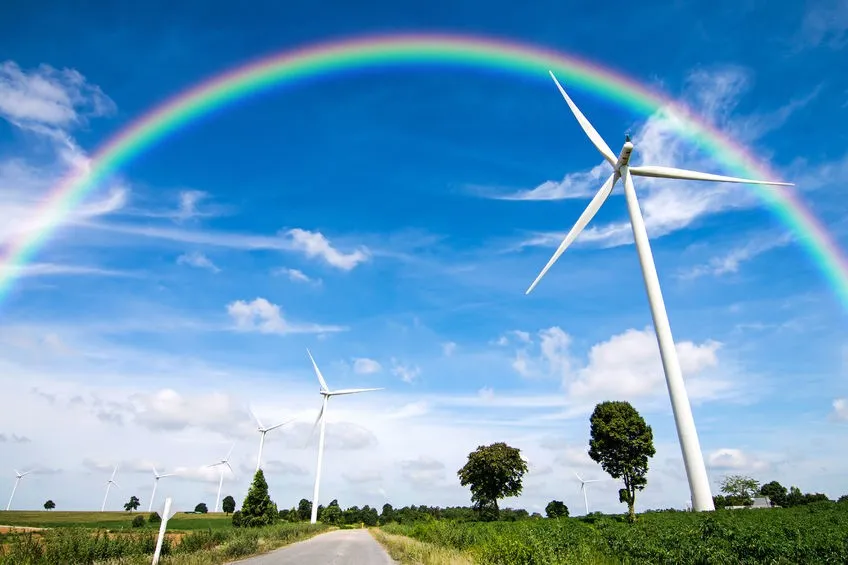
Misconception: Wind turbines are ugly
The shapes of wind turbines are simple, aerodynamic, streamlined forms. These characteristics are assets for being appreciated.
Wind turbines are white (primarily for aeronautical visibility reasons). This color is rather synonymous with simplicity and purity.

Misconception: Wind turbines drive tourists away
Various surveys conducted both in France and around the world have shown that tourists do not flee and have no intention of fleeing tourist sites located near wind farms.
Why make this claim about wind turbines? If it were true, then any development, whatever it may be, would drive tourists away, from power lines to billboards.

On the contrary, wind farms attract tourists who no longer want to tan mindlessly. Wind farms also serve as an educational outing for schoolchildren, high school students, and university students.
Wind farms fall within the scope of scientific tourism, industrial tourism, ecotourism, and green tourism, all new and original forms of discovery. Wind farms can be a way to keep visitors a little longer at their vacation spots, especially those from Northern Europe, who are more aware of renewable energy issues. To this end, thematic activities are often organized around wind farms.
In Denmark, "the Danish Wind Association enjoys making the connection between the establishment of wind farms and tourism: indeed, in Denmark, tourism has increased by about 50% since 1980. Wind farms become the landscape of both 'ecological' and 'industrial' tourism. Hotels, guesthouses, and campsites use this image to promote green tourism. Many nautical excursion companies offer boat trips to visit offshore wind farms (…) In Blavandshuk, there has been a notable increase in the number of visitors since the installation of an 80-turbine farm. In fact, they are reproduced everywhere: on brochures, postcards, etc…." (source: Quebec Tourism Intelligence Network - www.veilletourisme.ca).
Tourists, especially those from Northern Europe, are also concerned about their living environment, notably through the "blue flag" classification, which allows them to appreciate the quality of the places. Similarly, these visitors are concerned about how waste is collected and recycled and how their electricity is produced.
Misconception: Wind turbines are real bird choppers
Numerous studies have been conducted worldwide around wind farms to analyze their impact on birds. All monitoring shows that bird mortality is low to very low. These studies also show that the more precautions are taken in site selection and wind turbine layout, the lower this mortality is. The LPO is particularly attentive to the development of wind energy in France to ensure it respects biodiversity.
In any case, mortality related to wind turbines is incomparable to that related to road traffic, power lines, glass windows, hunting, pesticides and insecticides, oil spills, or the disappearance of bird-friendly habitats. For example, a high-voltage power line kills several dozen birds per kilometer per year (100,000 km in France). Hunting is responsible for the mortality of several million birds each year.
Birds, whose most developed sense is sight, see the wind turbines and avoid them.
This change in trajectory when approaching wind turbines is commonly observed by ornithologists.
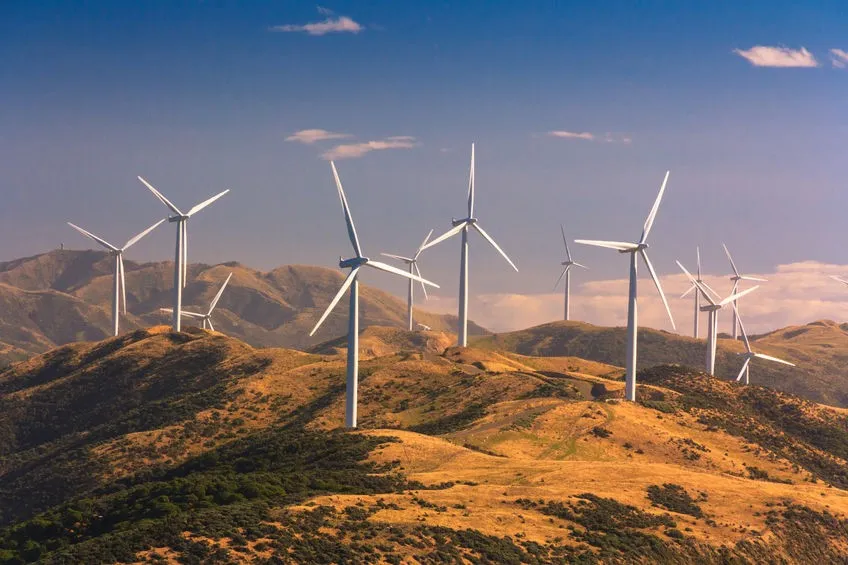
Misconception: Installing wind turbines will never stop the construction of nuclear power plants

In Europe, over a dozen years, about 45,000 megawatts of wind power have been installed. This capacity represents the equivalent of just under twenty nuclear reactors. These nuclear reactors did not need to be built.
During these years, only one or two nuclear reactors were commissioned in Europe. Among all the electricity production sources installed in Europe over the past twelve years that have compensated for the significant slowdown in the nuclear sector, the wind sector has developed the most.
Nuclear industry players are not mistaken: they are significant actors in wind energy. For example, the wind turbine manufacturer Jeumont belongs to the French nuclear group Areva.
Installing wind turbines is faster and more flexible than installing nuclear power plants. It takes about half the time (5 years for a wind farm versus 10 years for a nuclear power plant) between the initial studies and commissioning.
The installed wind MW costs half as much as the nuclear MW. Referring to the German program of the last 6 years, the equipment was installed at a rate of 9 to 10 MW per working day. The installation of wind turbines has become a routine operation that takes a few days, and commissioning follows immediately after the completion of the work. Financially, the immobilization of capital is therefore very short.
In contrast, the construction of an EPR, for example, will last 6 to 7 years with a testing phase of several months, ultimately resulting in a facility producing barely more annually, for the same investment of 3 billion Euros, than a 3 GW wind farm, which would have been built in about 1 year at the German rate and would have already produced the equivalent of 5 to 6 years of the EPR's electricity production by the time it is commissioned.
In a context of electricity market liberalization, the financial setup (investment in billions of €) and risk insurance (the State no longer needs to be involved) complicate the establishment of nuclear power plants.
Uranium reserves risk being depleted within a century, so nuclear power plants will need to be replaced by other electricity production systems.
The land area immobilized by a wind power system is of the same order for equal energy produced as their nuclear equivalents. An EDF nuclear power plant has a production ratio of about 100 GW per hectare (more by the sea, but then it must be compared to offshore wind), but this is a horizontal area, whereas wind power immobilizes barely more than 10% on the ground of the area swept by its rotor, even less in agricultural areas, giving it an equivalent energy density of land occupation.
Misconception: Yes to wind turbines, but at sea (or offshore)
Renewable energies are primarily complementary. Why oppose them to each other? Just as we need to use solar energy, water energy, biomass, or geothermal energy, we need to use wind energy both on land and at sea.
There is also complementarity in the size of wind farms: on land, farms can hardly exceed twenty wind turbines, while at sea it is possible to consider farms with a hundred or more wind turbines. At sea, we can talk about real wind power plants.
Offshore wind energy is a young sector. The feedback is limited and for now, "offshore" electricity is more expensive, as installation and maintenance are significantly more costly than on land. It would therefore be too early to bet everything on offshore wind turbines.
But nothing says that in a number of years, the situation will evolve so that "onshore" (land-based) wind turbines are dismantled if offshore wind turbines become incomparably productive. It should be noted that if this were the case, dismantling land-based wind turbines would be easy; and there would be no pollution left on the former wind farm, and there would be no danger in visiting its site.